
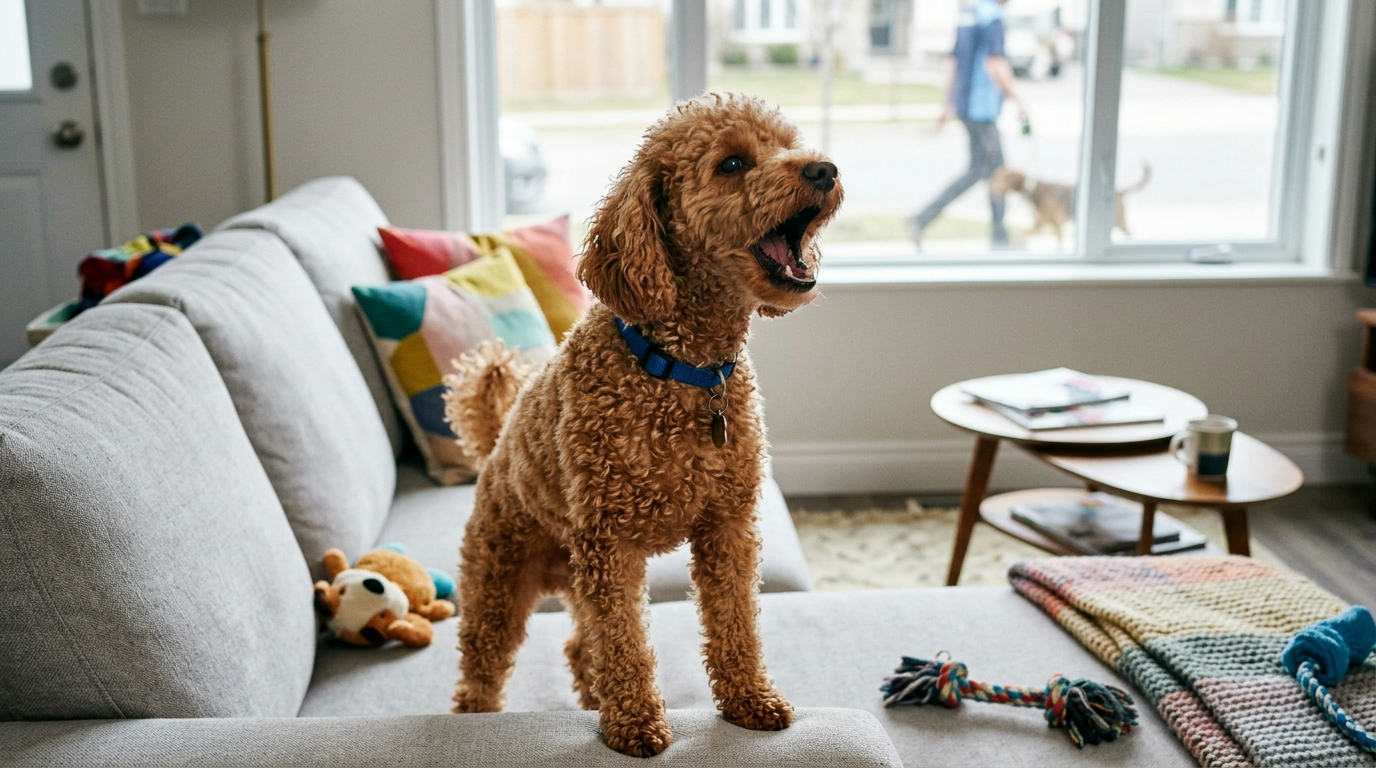
Miniature Poodle excessive barking can quickly shift from cute alerting to daily frustration. Although this breed is intelligent and loyal, constant vocalizing often signals unmet needs. Therefore, understanding the cause becomes the first step toward restoring calm.
Many owners assume small dogs simply bark more. However, frequent noise usually reflects anxiety, boredom, or overstimulation. Once you identify the trigger, you can apply targeted training that truly works.
This guide explains why Miniature Poodles bark excessively and how to correct the behavior gently. More importantly, it outlines long-term strategies that strengthen communication and reduce stress for both you and your dog.
Why Miniature Poodles Bark So Much
Miniature Poodles are highly alert and deeply attached to their families. Because of this strong bond, they respond quickly to environmental changes. While that alertness makes them excellent watchdogs, it also contributes to Miniature Poodle excessive barking.
First, they have high mental energy. Without enough stimulation, that energy converts into vocal behavior. Second, they react to unfamiliar sounds rapidly. Even subtle noises may trigger alert barking.
Additionally, separation anxiety commonly affects this breed. When left alone, stress often manifests through whining or persistent barking.
Unlike some breeds that bark randomly, Miniature Poodles usually vocalize for a reason. Therefore, punishment rarely solves the issue. Instead, addressing the emotional trigger produces lasting improvement.
Common Causes Behind the Noise
To reduce Miniature Poodle excessive barking, you must first identify the specific trigger. In most cases, one of several common causes is responsible.
Boredom and Lack of Mental Stimulation
Miniature Poodles thrive on problem-solving. Consequently, long days without engagement lead to frustration. That frustration often appears as repetitive barking.
Interactive toys, training drills, and scent games reduce mental buildup effectively. Even short sessions provide meaningful stimulation.
Separation Anxiety
Strong attachment can create distress when owners leave. As a result, barking may begin immediately after departure.
Signs include pacing, scratching doors, or destructive chewing. If anxiety drives the noise, gradual desensitization becomes essential.
Attention-Seeking Behavior
Sometimes barking works. If you respond every time, your dog learns that noise earns interaction.
Although it feels difficult, ignoring attention barking helps break the pattern. Consistency remains critical for success.
Territorial Alerting
Miniature Poodles often bark at delivery drivers or passing dogs. Their protective instincts run strong.
In this case, your goal is controlled alerting, not total silence. Teaching a reliable “quiet” cue helps regulate responses.
Miniature Poodle Excessive Barking Solutions That Work
Quick corrections rarely create permanent change. Instead, structured routines and calm leadership provide better results. The following Miniature Poodle excessive barking solutions focus on long-term success.
Teach a Clear Quiet Command
Begin by teaching “speak” on cue. While this sounds counterintuitive, it builds communication. Once your dog understands the bark command, introduce “quiet.”
When barking begins, calmly say “quiet.” The moment silence appears, reward immediately. Over time, this cue becomes dependable.
Ensure all family members use identical commands. Mixed signals confuse sensitive dogs.
Increase Physical and Mental Exercise
A mentally tired dog barks less. Although daily walks help, mental challenges matter even more.
Puzzle feeders, obedience sessions, and trick training drain excess energy. Additionally, rotating toys prevents boredom.
Because Miniature Poodles crave engagement, consistent enrichment dramatically reduces Miniature Poodle excessive barking episodes.
Create a Calm Resting Space
Designate a quiet area for relaxation. Soft bedding and limited stimulation encourage calm behavior.
White noise machines can block outside triggers. When your dog chooses the rest area, reward that decision.
Over time, this space becomes a stress-free retreat.
Managing Attention-Based Barking
Attention-driven barking requires discipline from owners. Even negative reactions reinforce the behavior.
When barking begins, avoid eye contact or verbal correction. Instead, wait for silence before giving attention.
Additionally, reward calm behavior before barking starts. For example, praise quiet sitting while you work nearby.
Teaching alternative actions, such as “place” or “sit,” redirects energy productively. With repetition, Miniature Poodle excessive barking decreases significantly.
Reducing Separation Anxiety
If barking occurs mainly during absences, structured training becomes essential.
Start with short departures lasting only a few minutes. Return calmly without excitement. Gradually extend the duration over days or weeks.
Provide enrichment before leaving. Frozen food toys or treat puzzles shift focus away from your exit.
Avoid dramatic goodbyes or emotional reunions. Calm routines lower overall anxiety levels.
For severe cases, consult a certified trainer or behaviorist. Professional support can accelerate improvement safely.
Controlling Environmental Triggers
Outside sounds often spark Miniature Poodle excessive barking. Therefore, reducing visual and auditory triggers helps.
Close blinds to block street views. Additionally, rearrange furniture to limit window access.
Play low-level background music to mask sudden noises. If doorbells trigger barking, practice controlled desensitization.
For example, play a recorded doorbell softly and reward calm responses. Gradually increase volume over time.
Through repetition, your dog learns that these sounds do not require alarm.
Avoiding Ineffective Methods
Shock collars and harsh corrections may suppress barking temporarily. However, they often increase fear and anxiety long term.
Because Miniature Poodles are sensitive, punitive methods damage trust. Instead, rely on positive reinforcement and structured guidance.
Consistency produces better outcomes than intensity.
When to Seek Professional Help
If Miniature Poodle excessive barking persists despite consistent training, professional evaluation may help.
Medical issues sometimes contribute to sudden behavior changes. Therefore, rule out pain or neurological concerns first.
A certified trainer can assess subtle environmental triggers you may overlook. Early intervention prevents deeper behavioral patterns.
Seeking assistance demonstrates commitment to your dog’s well-being.
Building Long-Term Calm Habits
Preventing barking proves easier than correcting it later. Maintain daily mental stimulation even after progress appears.
Continue reinforcing quiet behavior randomly. Occasional rewards maintain reliability.
Monitor stress signals such as pacing or yawning. If you intervene early, you prevent escalation.
Stable routines also support emotional balance. Predictable feeding, walks, and playtimes reduce anxiety significantly.
With sustained effort, Miniature Poodle excessive barking becomes rare rather than routine.
Final Thoughts on Restoring Peace
Miniature Poodle excessive barking does not mean your dog is stubborn or disobedient. In most cases, it reflects intelligence and sensitivity.
When you address root causes with patience, results follow. Although improvement requires time, structured training builds confidence and calm behavior.
Focus on communication instead of punishment. Provide exercise, mental enrichment, and safe spaces consistently.
Ultimately, your goal is not complete silence. Instead, aim for appropriate alerting under control. With steady guidance and thoughtful management, Miniature Poodle excessive barking transforms into balanced, manageable behavior.
FAQ
- Why does my Miniature Poodle bark at strangers?
This breed is naturally alert and protective. Controlled training helps limit unnecessary vocalizing. - How long does it take to reduce constant barking?
With consistent daily work, improvement often appears within two to four weeks. - Can exercise alone stop the noise?
Physical activity helps, but mental stimulation plays an even larger role. - Are bark collars safe for small dogs?
Many trainers discourage shock-based devices because they may increase anxiety. - Should I ignore barking completely?
Ignoring attention-driven noise works well. However, anxiety-related barking requires structured support.
Favorites
Keyword Strategyby AIPRM
Generate Buyer Personaby Contact For SEO
SEO Meta title and Meta Descriptionby Hussain Silat
Buyer Persona Premiumby George Leines
Lead Generationby Jennifer Sunardi
Create a full website of:by Diego Alfeiran
SEO Article Prompt for Agency (BBP)by Ian Manalo
Newsletter Growth Prompt (Week 1 – Week 4)by Ian Manalo
Custom Lists
SEO Article Prompt for HistoryOfBitcoinby Ian Manalo
SEO Article Prompt for BitcoinMinerSalesby Ian Manalo