Grooming is a lifelong necessity for Poodles, yet many dogs struggle emotionally during brushing, bathing, clipping, nail trimming, and drying sessions. Because Poodles have sensitive personalities and high emotional awareness, stressful grooming experiences may quickly create fear, resistance, and anxiety. Fortunately, the right calming techniques for poodles can help transform grooming into a more manageable and comfortable experience over time.
Poodles require regular coat maintenance because their curly fur mats easily without consistent care. However, grooming involves many sensations dogs naturally find overwhelming. Loud clippers, vibrating tools, water exposure, restraint, and pulling tangles may all contribute to emotional discomfort.
Many owners notice signs such as trembling, panting, whining, hiding, lip licking, or struggling during grooming sessions. These reactions often indicate fear rather than stubbornness or disobedience.
The best calming techniques for poodles focus on emotional safety, gradual exposure, positive reinforcement, and consistent trust-building. Dogs generally learn faster and cooperate more willingly when they feel secure and respected during handling.
Most importantly, grooming should never become a battle. Calm, patient approaches usually produce healthier long-term results than rushing or forcing anxious dogs through stressful experiences.
Why Grooming Anxiety Develops in Poodles
Understanding why grooming stress happens helps owners respond more effectively and compassionately. Many anxious Poodles develop fear because of past negative experiences or overwhelming sensory stimulation.
Calming techniques for poodles work best when owners recognize that grooming anxiety often involves emotional sensitivity rather than behavioral stubbornness.
Poodles frequently react strongly to noise, restraint, unfamiliar environments, or painful tangles. A single stressful grooming session may create lasting emotional associations if dogs feel trapped or frightened.
Additionally, highly intelligent dogs tend to remember uncomfortable experiences clearly. Therefore, rough brushing, accidental nail cuts, or frightening dryer sounds may contribute to ongoing fear responses.
Some Poodles also inherit naturally sensitive temperaments. Toy and Miniature Poodles especially may feel vulnerable during grooming because of their smaller size and heightened alertness.
Understanding these emotional factors encourages gentler and more patient grooming approaches.
Creating a Calm Grooming Environment
Environment strongly influences how dogs emotionally process grooming experiences. Loud noises, slippery floors, bright lighting, and rushed handling often increase anxiety significantly.
One of the most effective calming techniques for poodles involves creating a quiet predictable grooming space that feels physically and emotionally safe.
Non-slip mats or grooming surfaces help dogs feel more stable and secure during handling. Soft lighting and reduced background noise may also help sensitive dogs remain calmer.
Some owners use white noise or soft calming music to reduce environmental overstimulation. Others groom in quieter rooms away from household activity or distractions.
Temperature matters as well. Overheated dryers or cold bathing spaces may increase discomfort quickly.
Most importantly, owners should stay emotionally calm themselves because dogs often mirror human tension and frustration during stressful situations.
Using Positive Reinforcement Consistently
Positive reinforcement helps dogs associate grooming with rewarding experiences rather than fear or discomfort. Poodles respond especially well to reward-based handling because they are highly intelligent and emotionally aware.
Calming techniques for poodles should always include praise, treats, or affection during calm grooming behavior.
Owners should reward relaxed body language immediately. Calm standing, allowing touch, or tolerating tools quietly all deserve positive reinforcement.
Timing matters greatly during training. Rewards should appear while dogs remain relaxed rather than after anxiety escalates significantly.
High-value treats often work especially well during stressful grooming steps such as nail trimming or clipper exposure.
Punishment, yelling, or forced restraint frequently increases fear instead of improving cooperation. Positive emotional experiences create much stronger long-term progress.
Introducing Grooming Tools Gradually
Many dogs become frightened because grooming tools appear suddenly during stressful procedures. Gradual exposure helps prevent overwhelming emotional reactions.
Effective calming techniques for poodles involve allowing dogs to investigate brushes, combs, clippers, and dryers before using them directly.
Owners may first place tools near the dog while offering treats calmly. Later sessions can involve gently touching tools against the coat briefly without active grooming.
Clipper desensitization often requires extra patience because dogs react to both sound and vibration simultaneously.
Turning clippers on briefly across the room while rewarding calm behavior helps build positive associations gradually.
Dryers should also be introduced slowly. Lower speed settings and increased distance often help anxious dogs adjust more comfortably over time.
The Importance of Slow Desensitization
Desensitization teaches dogs that stressful experiences can happen safely in small manageable steps. This process remains one of the most valuable calming techniques for poodles long term.
Instead of forcing full grooming sessions immediately, owners should focus on short positive exposures that gradually increase tolerance and confidence.
For example, one session may involve only touching paws gently. Another session might focus solely on hearing clipper sounds calmly for several seconds.
Ending sessions before stress escalates significantly helps preserve trust and emotional stability.
Frequent short sessions usually produce better results than occasional lengthy grooming attempts. Poodles often learn quickly when training remains positive and consistent.
Patience becomes especially important for dogs with previous negative grooming experiences because emotional recovery takes time.
Recognizing Early Signs of Stress
Dogs communicate discomfort long before panic or aggression appears. Therefore, recognizing subtle stress signals allows owners to adjust sessions before anxiety intensifies.
Helpful calming techniques for poodles include monitoring body language closely during grooming routines.
Lip licking, yawning, trembling, whale eye, pinned ears, tucked tails, panting, avoidance, or freezing behavior may all indicate emotional stress developing.
Some dogs become unusually still rather than actively resisting. Owners should avoid assuming stillness always means comfort.
Responding early helps prevent emotional overload. Pausing, lowering intensity, or offering breaks often improves trust and cooperation significantly.
Ignoring early stress signs may worsen anxiety because dogs learn their communication attempts do not change the situation.
Using Gentle Touch and Massage
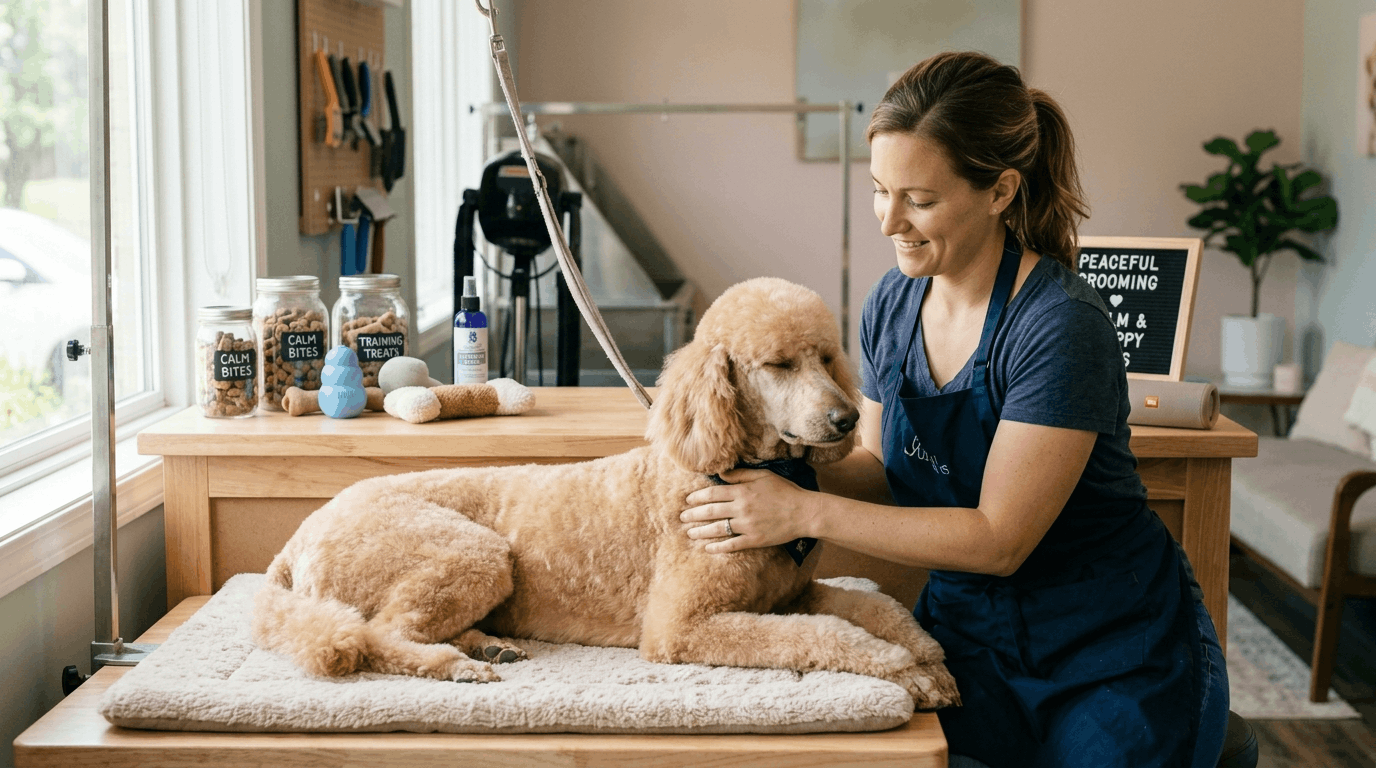
Physical relaxation techniques may help anxious Poodles feel calmer before and during grooming sessions. Gentle touch often lowers tension while improving emotional comfort naturally.
Calming techniques for poodles sometimes include light massage around the shoulders, chest, ears, or neck before brushing or clipping begins.
Slow predictable movements generally feel safer than sudden grabbing or quick restraint.
Massage may also help owners identify sensitive areas or hidden mats before grooming becomes more intensive.
However, anxious dogs should always remain free to move away comfortably if needed. Relaxation techniques lose effectiveness if dogs feel trapped physically.
Gentle physical reassurance often strengthens trust when paired with calm verbal praise and patient handling.
Managing Bathing and Drying Anxiety
Bathing and drying often create additional stress because dogs experience water exposure, temperature changes, loud sounds, and unfamiliar sensations simultaneously.
Many calming techniques for poodles focus specifically on reducing fear during these stages.
Warm water usually feels more comfortable than cold temperatures. Gentle water pressure also helps sensitive dogs remain calmer.
Owners should avoid spraying directly into the face whenever possible because sudden facial exposure may trigger panic responses.
Towel drying before introducing high-velocity dryers often eases transitions more comfortably.
Dryers should start at lower speeds and farther distances initially. Gradual exposure usually improves tolerance significantly over time.
Treat rewards and calm praise throughout drying sessions often help anxious dogs feel safer emotionally.
Keeping Grooming Sessions Short
Lengthy grooming appointments may overwhelm sensitive dogs emotionally and physically. Consequently, shorter sessions often improve overall cooperation and emotional resilience.
Calming techniques for poodles work best when owners focus on small achievable goals rather than perfect grooming immediately.
One session might involve brushing only the legs and chest calmly. Another may focus solely on nail trimming or facial care.
Frequent shorter sessions generally prevent emotional exhaustion while reducing matting between grooming appointments.
Dogs also recover emotionally more effectively after brief positive experiences compared to prolonged stressful handling.
Consistency matters more than session length during anxiety reduction training.
The Role of Exercise Before Grooming
Moderate physical activity before grooming often helps release nervous energy naturally. Exercise may improve focus while reducing hyperactivity or emotional tension.
Many calming techniques for poodles include structured walks or gentle play sessions before grooming begins.
Exercise should remain balanced rather than exhausting. Overexertion sometimes increases irritability or physical discomfort instead of promoting calmness.
Mental stimulation also helps prepare dogs emotionally. Short training sessions or scent games before grooming may tire intelligent dogs cognitively while improving focus.
Balanced pre-grooming routines often create smoother sessions overall.
Professional Grooming Support
Some dogs experience severe grooming fear requiring additional professional assistance. Fear-free groomers and veterinary behavior specialists may help anxious dogs significantly.
Professional calming techniques for poodles often involve slower pacing, quiet environments, low-stress handling, and behavioral conditioning strategies.
Experienced groomers also recognize stress signals early and adapt techniques accordingly.
Owners should communicate openly about anxiety triggers, past experiences, and sensitive areas before appointments.
In severe cases, veterinarians may recommend temporary anti-anxiety medications alongside behavior training plans.
Seeking professional support early often prevents grooming anxiety from worsening over time.
Building Long-Term Grooming Confidence
Helping dogs feel emotionally safe during grooming requires patience, consistency, and trust-building over time. Confidence develops gradually through repeated positive experiences rather than quick fixes.
The best calming techniques for poodles focus on emotional comfort first while slowly increasing tolerance and cooperation naturally.
Regular gentle maintenance grooming usually feels less stressful than infrequent intensive sessions involving severe matting or prolonged restraint.
Owners should celebrate small improvements rather than expecting perfection immediately. Calm standing, reduced trembling, or improved tolerance all represent meaningful progress.
Most importantly, grooming should strengthen the relationship between dogs and owners rather than damage trust emotionally.
With patient handling, gradual desensitization, positive reinforcement, and supportive routines, many anxious Poodles learn to tolerate and even relax during grooming sessions. Calm grooming experiences not only improve coat health but also support emotional wellness and stronger long-term trust throughout every stage of life.
FAQ
1. Why do some Poodles fear grooming sessions?
Sensitive personalities, loud equipment, painful tangles, and negative past experiences often contribute to grooming anxiety.
2. Can positive reinforcement reduce grooming stress?
Yes, treats, praise, and calm handling often help dogs develop healthier emotional associations with grooming.
3. Should anxious dogs receive shorter grooming sessions?
Yes, shorter sessions usually prevent emotional overload while building confidence more gradually.
4. How can owners help dogs tolerate clippers better?
Gradual exposure to clipper sounds and vibration combined with rewards often improves comfort over time.
5. Are professional fear-free groomers helpful for anxious Poodles?
Yes, fear-free groomers often use gentler techniques and calmer environments designed for sensitive dogs.