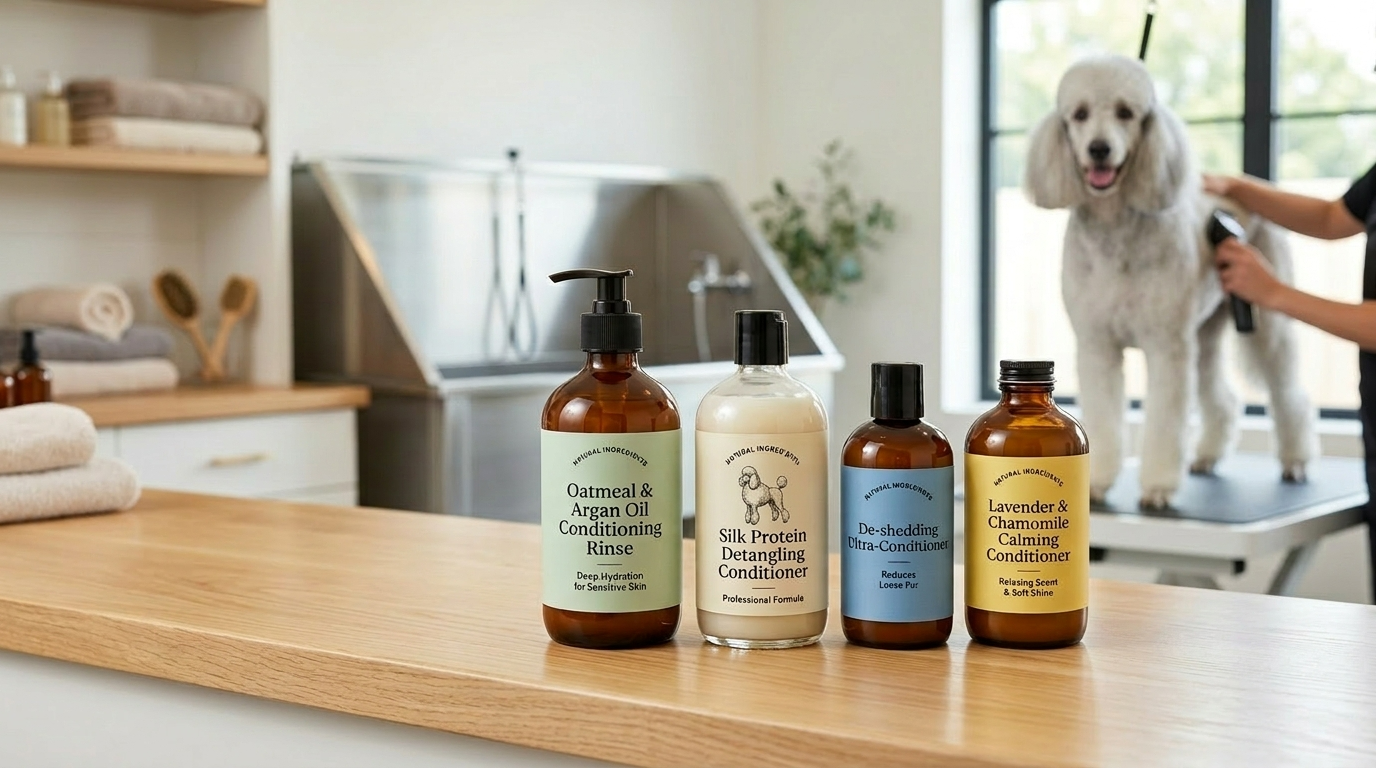
Finding the best coat conditioners is essential if you want your dog’s fur to stay soft, smooth, and radiant. While shampoo removes dirt and buildup, conditioner restores moisture and strengthens hair strands. Therefore, using the right product supports long-term skin and coat health.
Many owners overlook conditioning, assuming shampoo alone is enough. However, cleansing can strip natural oils, especially in dogs with longer or curly coats. As a result, dryness and tangles may develop.
In this guide, you will learn how the best coat conditioners improve hydration, reduce matting, and enhance shine. More importantly, you will discover how to choose the right formula for your dog’s specific coat type.
Why Conditioning Matters for Dog Coats
Conditioning replenishes moisture lost during bathing. Because dogs have sensitive skin, maintaining a balanced moisture barrier prevents irritation.
Additionally, conditioner smooths the outer hair layer. When the cuticle lies flat, the coat reflects more light and appears shinier. Consequently, grooming becomes easier and more comfortable.
The best coat conditioners also help prevent static and breakage. Long-haired breeds especially benefit from added slip that reduces tangles.
Without conditioning, fur may feel rough and brittle. Therefore, incorporating this step into your grooming routine protects overall coat quality.
How Coat Type Affects Conditioner Choice
Different coat textures require different formulas. Therefore, understanding your dog’s fur type guides smarter product selection.
Short Coats
Short-haired breeds benefit from lightweight moisturizers. Heavy products may weigh down the coat or leave residue.
Long or Silky Coats
Long fur tangles easily. Detangling conditioners with added slip reduce mat formation and improve manageability.
Curly or Dense Coats
Curly-coated breeds require deeper hydration. Rich formulas help maintain softness and prevent dryness within thick layers.
Double Coats
Dogs with undercoats need balanced conditioning. Overly heavy products may trap moisture and affect insulation.
By matching products carefully, the best coat conditioners deliver optimal results for each coat type.
Key Ingredients to Look For
High-quality ingredients determine product effectiveness. Therefore, reading labels carefully matters.
Aloe vera soothes irritation and supports hydration. Additionally, oatmeal calms dry or itchy skin.
Shea butter and coconut oil provide deeper moisture for thicker coats. However, balanced formulas prevent greasy residue.
Vitamin E supports skin repair and antioxidant protection. Meanwhile, omega-rich oils enhance shine naturally.
Avoid artificial dyes and strong fragrances. Sensitive dogs may react negatively to harsh additives.
The best coat conditioners combine nourishing ingredients without unnecessary fillers.
Benefits Beyond Shine
Conditioners offer more than cosmetic improvement. Hydrated skin reduces itching and flaking significantly.
Additionally, smoother fur resists dirt buildup. As a result, grooming sessions become quicker and less stressful.
For dogs prone to matting, conditioning reduces pulling during brushing. Consequently, discomfort decreases.
Regular use of the best coat conditioners strengthens hair strands over time. Healthy hair breaks less easily and maintains elasticity.
Improved coat condition also enhances overall appearance and confidence.
How to Apply Conditioner Properly
Application technique influences results. After shampooing, rinse thoroughly before applying conditioner.
Distribute evenly through damp fur. Focus on areas prone to tangling, such as behind ears and under legs.
Massage gently to ensure even coverage. Then allow the product to sit for the recommended time.
Rinse thoroughly to prevent residue buildup. Leftover conditioner may cause itching.
Afterward, towel dry gently and brush once the coat is partially dry.
Proper use maximizes the benefits of the best coat conditioners.
Leave-In vs. Rinse-Out Conditioners
Both types offer advantages. Rinse-out formulas provide deep hydration during bath time.
Leave-in sprays work well between washes. They reduce tangles and add light moisture without requiring a full bath.
For active dogs, leave-in conditioners protect fur from environmental stress. Additionally, they help maintain shine between grooming sessions.
Choosing between them depends on coat type and lifestyle. Many owners use both for comprehensive care.
The best coat conditioners often include versatile options for different grooming needs.
How Often Should You Condition Your Dog?
Frequency depends on coat type and bathing schedule. Dogs bathed monthly typically benefit from conditioning each time.
Long or curly coats may require conditioning more frequently to prevent dryness.
However, over-conditioning can weigh down the coat. Therefore, observe how your dog’s fur responds.
If the coat feels greasy or heavy, reduce usage. If dryness persists, consider increasing frequency slightly.
Balanced care ensures the best coat conditioners work effectively without creating buildup.
Common Conditioning Mistakes
Skipping conditioner entirely often leads to increased matting. Conversely, applying too much product may clog pores.
Using human conditioners can disrupt skin pH balance. Therefore, always select dog-specific formulas.
Failing to rinse thoroughly may cause residue irritation. Additionally, neglecting regular brushing reduces conditioner benefits.
Consistency and moderation remain key for long-term coat health.
Supporting Coat Health Beyond Conditioning
Nutrition plays a major role in coat shine. Diets rich in omega fatty acids strengthen hair structure from within.
Regular brushing distributes natural oils evenly. Combined with conditioning, brushing enhances smoothness.
Hydration also affects skin elasticity. Ensure fresh water remains available daily.
Environmental factors such as dry air may increase coat dryness. In such cases, additional moisturizing support may help.
When grooming routines include the best coat conditioners alongside balanced nutrition, coat quality improves noticeably.
When to Seek Professional Advice
Persistent dryness, hair loss, or skin irritation may signal underlying health issues.
Consult a veterinarian if symptoms continue despite proper grooming. Allergies or hormonal imbalances sometimes affect coat condition.
Professional groomers can also recommend products tailored to your dog’s coat type.
Early intervention prevents worsening problems.
Final Thoughts on Achieving a Shiny Coat
The best coat conditioners support hydration, detangling, and long-term coat strength. While shampoo cleans, conditioner restores balance and protection.
Choose formulas based on coat texture and skin sensitivity. Apply correctly and rinse thoroughly for best results.
Maintain consistent grooming habits and balanced nutrition. Together, these steps create a smooth, radiant coat.
With thoughtful product selection and routine care, the best coat conditioners transform grooming from basic maintenance into comprehensive coat protection.
FAQ
- How do I know if my dog needs conditioner?
If the coat feels dry, brittle, or prone to tangling, conditioning may improve texture and comfort. - Can I use human conditioner on my dog?
No, human products may disrupt canine skin balance and cause irritation. - How long should conditioner stay on the coat?
Follow product instructions, usually one to three minutes before rinsing thoroughly. - Are leave-in sprays safe for daily use?
Many are safe for light daily use, but always check label guidelines. - Does conditioner reduce shedding?
While it does not stop shedding, it reduces breakage and improves overall coat manageability.