
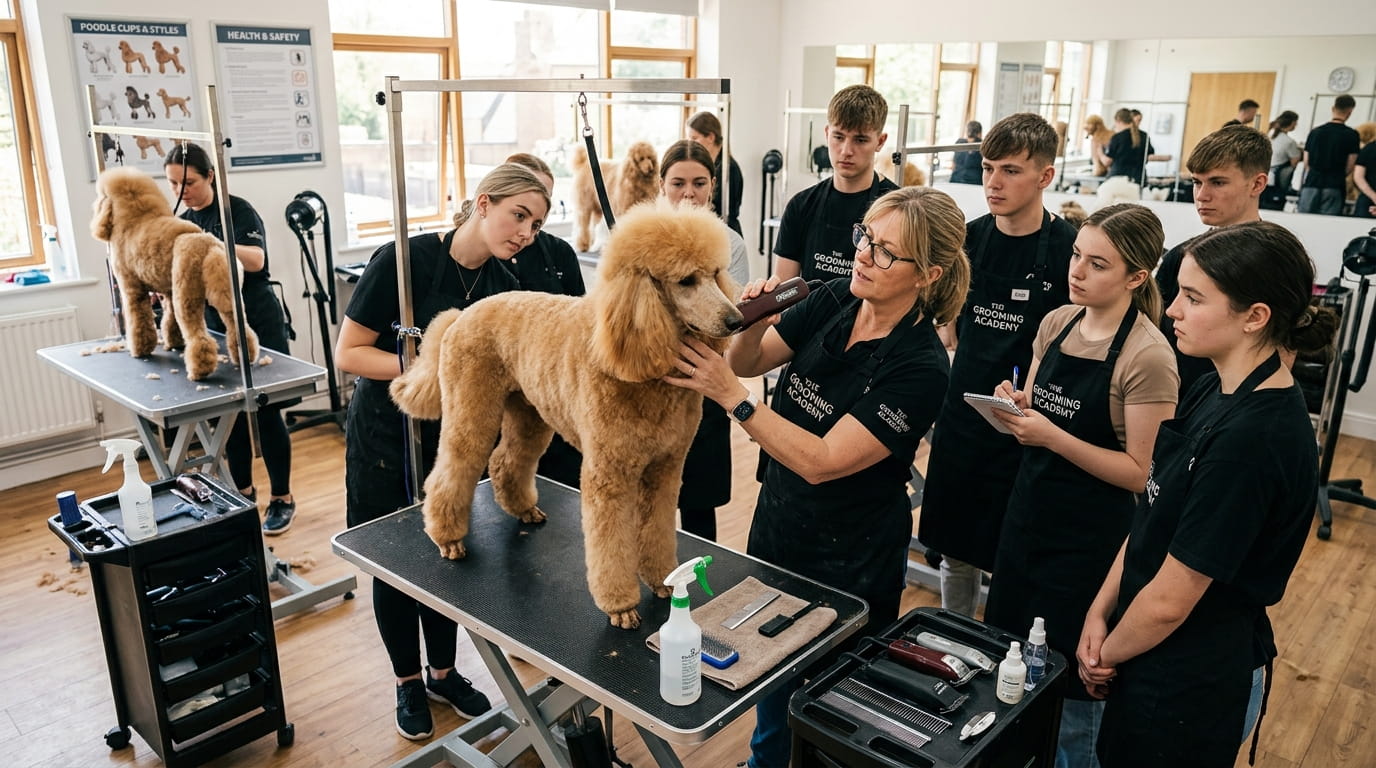
Poodle grooming courses can make home coat care feel less stressful, especially when your dog dislikes brushing, bathing, clippers, dryers, or paw handling. Poodles need regular grooming because their curly coats can mat quickly, yet many owners feel unsure about tools, technique, timing, and safety. A good online course can help you understand coat maintenance, build your confidence, and create a calmer routine between professional appointments. However, the best course should teach more than haircut steps. It should also explain gentle handling, low-stress grooming habits, safe equipment use, and realistic expectations for your dog’s comfort level.
Why Online Grooming Training Helps Poodle Owners
Poodles have beautiful coats, but those coats need steady care. Unlike many shedding breeds, Poodles grow dense, curly hair that can trap moisture, dirt, and loose hair close to the skin. If brushing falls behind, mats can form near the ears, legs, collar area, belly, tail, and armpits. These mats can pull on the skin and turn grooming into a painful experience. Because of that, learning basic coat care can protect both your dog’s comfort and your relationship.
Poodle grooming courses can help owners learn skills in a slower, more manageable way. Instead of guessing while your dog wiggles on the table, you can watch lessons, pause videos, replay techniques, and practice one small step at a time. This format works well for busy owners because you can learn around your schedule. It also helps nervous beginners avoid rushed mistakes.
Online learning can also reduce fear for dogs. When owners understand how to brush correctly, trim small areas safely, and introduce grooming tools gradually, the dog feels less trapped. Over time, short and gentle practice sessions can make grooming feel more familiar. That does not mean every owner must become a professional groomer. Instead, the goal is to keep your Poodle comfortable between salon visits and prevent small coat problems from becoming big ones.
A good course can also help you communicate better with your groomer. When you understand coat length, mat prevention, clipper basics, and grooming language, you can ask clearer questions. As a result, your groomer can recommend practical trims and schedules that suit your dog’s lifestyle.
What the Best Courses Should Teach
The best Poodle grooming courses should begin with coat basics. Before you learn clipping or scissoring, you need to understand how Poodle hair behaves. Curly coats need brushing down to the skin, not just smoothing the top layer. A course should explain slicker brushes, metal combs, detangling sprays, drying methods, and safe ways to work through small tangles. It should also teach when a mat is too tight to brush out.
A strong course should also cover bathing and drying. Many owners focus on the haircut, but the bath and dry can shape the whole result. If the coat stays damp or curly in the wrong way, trimming becomes harder. If the dryer scares your dog, the session can fall apart before you reach the haircut stage. Therefore, look for lessons that teach calm dryer introduction, safe ear protection, and proper coat drying.
Tool safety matters too. Clippers, blades, shears, nail tools, and grooming tables can help, but they can also cause injury when used carelessly. A good course should explain blade heat, skin folds, ear edges, paw pads, sanitary areas, and safe restraint. It should never make risky steps look easy without warning you where mistakes happen.
The best programs also teach stress signals. A Poodle may pant, shake, freeze, turn away, lick lips, yawn, tuck the tail, or resist handling when grooming feels too intense. When you learn these signals, you can pause before your dog panics. This helps grooming become a process of trust, not pressure.
Choosing a Course for Your Skill Level
Not every course suits every owner. Some programs target pet parents who want simple home care, while others train future professional groomers. Before you enroll, decide what you really need. If your goal is brushing, bathing, face trimming, paw care, and mat prevention, a beginner-friendly course may be enough. If you want advanced Poodle styles, show trims, or salon-level skills, choose a more detailed program.
Poodle grooming courses should match your current confidence. A beginner may feel overwhelmed by advanced scissoring lessons or show coat maintenance. Meanwhile, an experienced owner may want deeper instruction on shaping, clipping patterns, and coat preparation. The right course should feel challenging but not discouraging.
Course format also matters. Some people learn best through step-by-step videos. Others prefer written notes, printable checklists, live coaching, or feedback from an instructor. Video lessons work especially well for grooming because you can see hand placement, tool angles, dog positioning, and coat movement. However, support matters when you get stuck. If possible, choose a course that offers instructor access, community support, or clear troubleshooting lessons.
Budget plays a role as well. Free lessons can teach basic concepts, while paid courses may offer deeper structure and better guidance. A low-cost course may help you start, but it may not cover anxious dogs, Poodle-specific coat care, or safe trimming in enough detail. Therefore, compare value rather than price alone.
Online Course Options Worth Considering
Poodle grooming courses vary widely, so it helps to understand what different programs offer. Some focus on general grooming foundations, while others cover Poodle-specific styles. For example, Poodle University from Leading Edge Dog Show Academy focuses on online Poodle grooming and handling education, with lessons from Allison Alexander and a bundle that includes Poodle prep and show-ring styling topics. This may suit owners or groomers who want breed-specific detail and a more polished grooming education.
General dog grooming programs can also help if they teach strong fundamentals. Paragon School of Pet Grooming offers online professional grooming certification programs built from decades of grooming experience. Animal Behavior College also offers online dog grooming classes with curriculum and real-world experience. These programs may suit people who want a career path or a more complete foundation, not just a few home grooming tips.
Beginner-focused programs can help owners who feel nervous. Primpaws Academy promotes a step-by-step online grooming course for beginners, with a focus on building confidence before advanced grooms. Alison’s free Diploma in Dog Grooming introduces grooming basics, canine anatomy, pre-grooming checks, and calm handling concepts. These options may work well for owners who want to start slowly before investing in a larger program.
Safety-focused training also matters. The AKC S.A.F.E. Grooming Program focuses on salon safety education, which can help groomers and serious learners think more carefully about handling and risk. While it may not replace hands-on Poodle coat practice, safety education can support better decisions. The best choice depends on whether you want pet-owner skills, professional training, show grooming knowledge, or safer home maintenance.
What Makes Grooming Less Stressful for Your Dog
Stress-free grooming starts before the clippers ever turn on. Your Poodle needs to feel safe with touch, tools, sounds, and routine. Good Poodle grooming courses should teach gradual desensitization. That means you introduce each part of grooming slowly, with rewards and short sessions. For example, you might show the brush, offer a treat, touch the brush to the coat, reward again, and stop before your dog struggles.
Short practice sessions usually work better than long battles. Five calm minutes can build more trust than one forced hour. If your Poodle already fears grooming, start with the easiest task. Touch one paw, brush one small area, or turn the dryer on across the room for a few seconds. Then reward and stop. Over time, your dog can learn that grooming does not always mean discomfort.
Your own energy matters too. If you feel rushed, tense, or frustrated, your Poodle may become more worried. Prepare tools before you start. Choose a quiet space. Use a non-slip surface. Speak calmly, move slowly, and reward often. These small habits can change the emotional tone of grooming.
A course should also teach when to stop. Some owners push through because they want to finish the job. However, pushing a scared dog too far can make the next session worse. A good learning program helps you choose progress over perfection.
Tools You Should Understand Before Starting
Before taking online lessons, gather the right basic tools. Most Poodle owners need a slicker brush, stainless steel comb, detangling spray, dog-safe shampoo, towels, nail tools, ear care supplies, and possibly clippers. However, tools should match your dog’s coat, size, and tolerance level. Poor tools can pull hair, scratch skin, or make grooming harder than it needs to be.
Poodle grooming courses should explain tool quality without making you buy everything at once. Beginners often overspend on items they do not understand. Start with reliable basics, then add tools as your skills grow. If a course pushes too many products without teaching technique, be cautious.
Clippers need special care. You should learn how to choose blade lengths, check blade heat, clean equipment, and avoid sensitive areas. Poodle skin can hide under dense curls, so careless clipping can cause nicks. Also, ears, armpits, paw pads, and sanitary areas need extra attention. A good course should slow down during these lessons.
Dryers also need proper instruction. High-velocity dryers help straighten curly coats, but they can scare anxious dogs. Learn how to introduce noise gradually, control airflow, protect ears, and keep sessions calm. If your dog panics, lower the intensity or ask a professional groomer for help.
How to Use Online Lessons With a Professional Groomer
Online learning does not have to replace professional grooming. In fact, many Poodle owners get the best results by combining both. A professional groomer can handle full haircuts, difficult mats, safe shaping, and detailed trims. Meanwhile, you can maintain the coat at home through brushing, bathing support, paw handling, and gentle practice.
Poodle grooming courses can help you understand what your groomer needs from you. If you keep the coat brushed between visits, appointments become shorter and more comfortable. If you ignore mats until the next groom, your dog may need a shavedown. That can feel disappointing, but it may be the kindest option when tangles pull on the skin.
Ask your groomer what to practice at home. They may suggest brushing certain areas more often, using a specific comb, choosing a shorter trim, or booking more frequent appointments. This advice can guide your online learning. Instead of trying every technique, you can focus on the skills your dog needs most.
You can also ask your groomer which lessons look safe for your dog. Some online videos make advanced steps look simple, but real grooming requires timing and control. If you feel unsure, do not practice near eyes, ears, paw pads, or skin folds without guidance. Confidence should grow with caution.
Mistakes to Avoid When Learning at Home
One common mistake is starting with a full groom too soon. Beginners often want to bathe, dry, brush, clip, trim nails, and shape the face in one session. That can overwhelm both the owner and the dog. Instead, separate the process. Brush one day, bathe another day, and practice handling in short sessions throughout the week.
Another mistake is brushing only the surface. A Poodle can look fluffy on top while mats form underneath. Always check your work with a comb. If the comb cannot move through the coat smoothly, the area needs more attention. However, do not rip through tangles. Work gently, use detangling spray, or ask a groomer for help.
Some owners also wait too long between grooming sessions. Poodle grooming courses can teach maintenance, but they cannot undo months of neglected coat care without stress. A realistic schedule matters. Depending on coat length, many Poodles need professional grooming every four to eight weeks, plus regular brushing at home.
Finally, avoid comparing your first attempts to professional results. Groomers build skill through practice, repetition, and hands-on training. Your goal at home should be comfort, cleanliness, and basic maintenance. Pretty styling can come later if you and your dog enjoy the process.
Conclusion: The Best Course Builds Calm Confidence
Poodle grooming courses can help owners turn grooming from a stressful chore into a calmer, more predictable routine. The best programs teach coat care, tool safety, gentle handling, drying methods, and realistic expectations. They also help you understand your dog’s stress signals, so you can build trust instead of forcing cooperation.
Choose a course that matches your goals. A pet owner may need simple brushing and maintenance lessons. A future groomer may need professional certification. A show enthusiast may want Poodle-specific styling. Whatever path you choose, remember that stress-free grooming starts with patience. Learn slowly, practice kindly, and keep professional groomers involved when needed. With the right support, your Poodle can feel cleaner, calmer, and more comfortable through every stage of coat care.
FAQ
1. Are Online Grooming Lessons Enough for Poodle Owners?
Online lessons can help with brushing, bathing, tool basics, and maintenance. However, many owners still need a professional groomer for full trims, mats, and detailed styling.
2. What Should Beginners Learn First?
Beginners should start with coat brushing, comb checking, safe handling, bathing basics, and stress signals. These skills make every future grooming step easier.
3. Can Online Training Help an Anxious Poodle?
Yes, online training can help if it teaches gentle handling and gradual introductions. Short, calm practice sessions can reduce fear over time.
4. How Often Should I Practice Grooming at Home?
Practice small grooming habits several times a week. Short sessions often work better than long sessions, especially for dogs that dislike handling.
5. Should I Buy Clippers Before Taking a Course?
It is better to learn tool basics before buying clippers. Once you understand blade lengths, safety, and maintenance, you can choose equipment more confidently.