When it comes to keeping your pet thriving, poodle hydration health plays a bigger role than many owners realize. While food and exercise often get the most attention, proper hydration supports nearly every function in your poodle’s body. Without enough water, even the healthiest routine can fall short.
Poodles are active, intelligent dogs that rely on consistent hydration to maintain energy, digestion, and coat quality. However, many subtle signs of dehydration go unnoticed until they become serious. That is why understanding hydration is not just helpful—it is essential.
Why Water Matters More Than You Think
Water supports circulation, temperature control, and nutrient absorption. Because of this, poodle hydration health directly affects how your dog feels and functions every day.
For example, proper hydration helps regulate body temperature, especially in warmer climates. It also keeps joints lubricated, which is important for active or aging poodles. Additionally, water aids digestion by helping break down food and move nutrients through the body.
Without enough water, your poodle may feel sluggish or uncomfortable. Over time, dehydration can even lead to more serious health concerns. Therefore, maintaining strong hydration habits is one of the simplest ways to support long-term wellness.
Recognizing Early Signs of Dehydration
Understanding the early warning signs is key to protecting poodle hydration health. Many symptoms appear subtle at first, which is why they are easy to miss.
Your poodle may show signs such as dry gums, reduced energy, or increased panting. In some cases, their nose may feel dry, although this is not always a reliable indicator. Another common sign is skin elasticity. If the skin does not quickly return to place when gently lifted, dehydration may be present.
Additionally, changes in behavior can signal a problem. Your poodle might seem less playful or more tired than usual. Paying attention to these small changes allows you to act early and prevent more serious issues.
Daily Habits That Support Hydration
Building consistent habits is the easiest way to improve poodle hydration health. Small daily actions can make a noticeable difference over time.
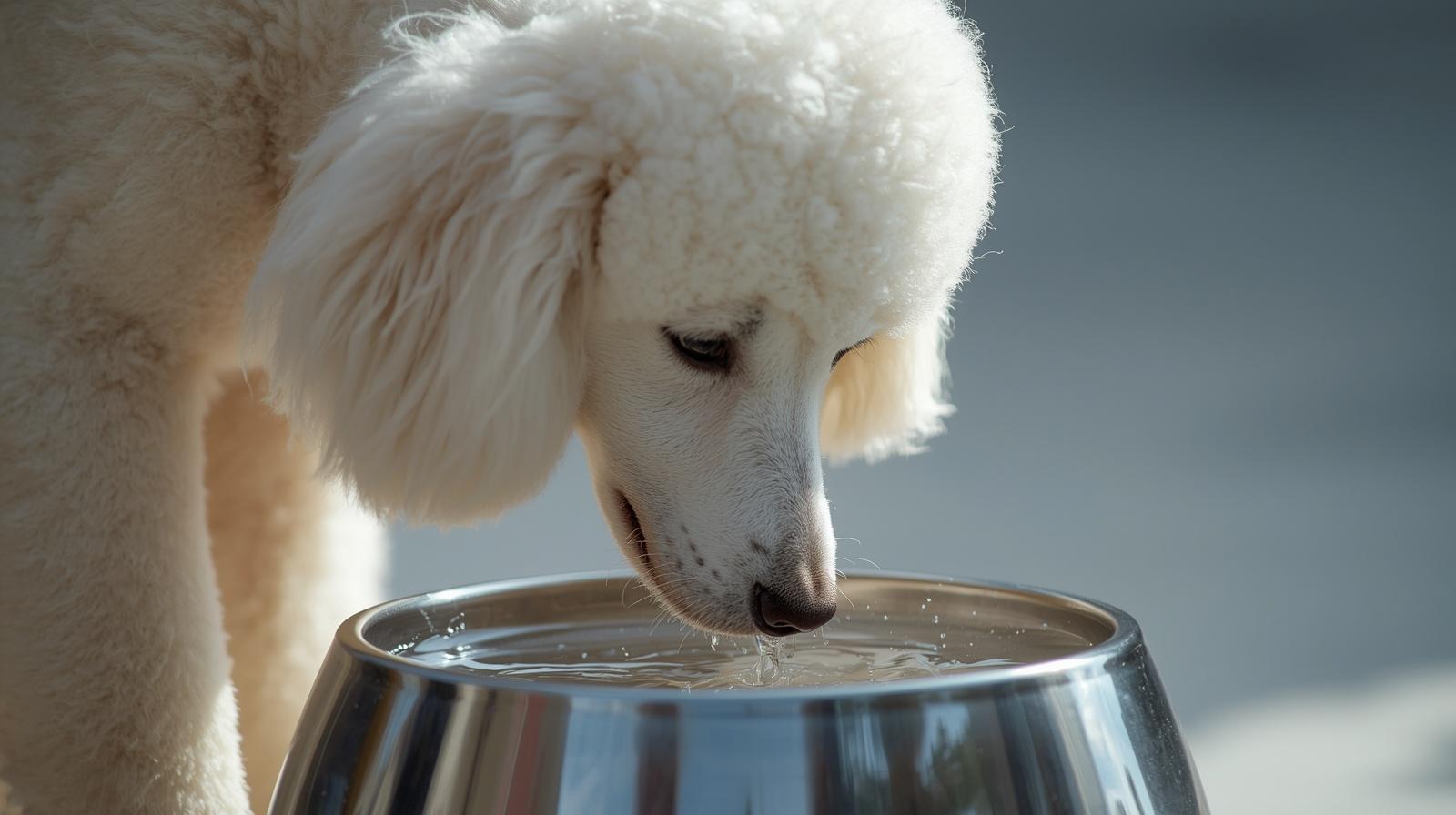
First, always provide fresh, clean water. Replace it at least once or twice a day to keep it appealing. Many poodles prefer cool water, especially in warmer environments.
Next, place water bowls in areas your poodle frequently visits. Easy access encourages more frequent drinking. If your dog spends time in different rooms, consider adding multiple bowls.
You can also incorporate moisture into meals. Adding water or low-sodium broth to dry food increases overall intake. This is especially helpful for poodles that do not drink enough on their own.
How Diet Impacts Hydration Levels
Diet plays a larger role in poodle hydration health than most owners expect. While dry kibble is convenient, it contains very little moisture.
Because of this, poodles on dry diets must rely heavily on drinking water. However, some dogs naturally drink less, which can create a hydration gap. Adding wet food or fresh ingredients can help balance this.
Foods with higher moisture content provide additional hydration while supporting digestion. For example, incorporating safe fruits and vegetables with high water content can be beneficial. Always introduce new foods gradually to avoid digestive upset.
By adjusting diet alongside water intake, you create a more balanced approach to hydration.
Hydration and Coat Health Connection
A well-hydrated poodle often has a healthier, shinier coat. That is because poodle hydration health directly affects skin condition and hair quality.
When hydration levels are low, the skin can become dry and flaky. This may lead to itching, irritation, or dull fur. Over time, coat quality can decline if hydration is not addressed.
On the other hand, proper hydration supports natural oils that keep the coat soft and manageable. This is especially important for poodles, whose curly coats require regular maintenance.
Grooming also works better when your dog is well-hydrated. Brushing becomes easier, and the coat retains its texture and shine.
Adjusting Hydration for Activity and Weather
Your poodle’s hydration needs can change based on activity level and climate. Active dogs require more water to replace what they lose through panting and movement.
During hot weather, poodle hydration health becomes even more critical. Heat increases the risk of dehydration, so frequent water breaks are essential. Always provide shade and avoid intense activity during peak temperatures.
In contrast, colder weather may reduce your dog’s thirst. However, hydration is still important. Indoor heating can dry out the air, which may affect your poodle’s skin and overall comfort.
By adjusting your routine based on conditions, you ensure your poodle stays properly hydrated year-round.
Encouraging Your Poodle to Drink More
Some poodles naturally drink less water, which can make hydration a challenge. Fortunately, there are simple ways to encourage better habits.
Try using a pet water fountain. Moving water often attracts dogs and encourages them to drink more frequently. Additionally, you can experiment with different bowl materials, as some dogs prefer certain textures.
Flavoring water lightly with pet-safe broth can also increase interest. However, keep it mild and avoid additives that could upset digestion.
Consistency is key. When you make water accessible and appealing, your poodle is more likely to drink regularly.
When to Be Concerned About Hydration
While most hydration issues can be managed at home, there are times when professional help is necessary. Severe dehydration requires immediate attention.
Signs such as persistent lethargy, sunken eyes, or loss of appetite should not be ignored. In these cases, consult a veterinarian as soon as possible.
Additionally, underlying health conditions can affect poodle hydration health. Kidney issues, for example, may increase water needs or cause imbalances. Regular checkups help detect these problems early.
By staying alert and proactive, you can address concerns before they become serious.
Creating a Long-Term Hydration Routine
Consistency is the foundation of strong poodle hydration health. Rather than relying on occasional effort, focus on building habits that last.
Keep water fresh, monitor intake, and adjust based on your dog’s needs. Over time, these actions become part of your daily routine.
Tracking your poodle’s behavior also helps. If you notice changes in drinking patterns, investigate early. Small adjustments can prevent larger issues later.
Ultimately, hydration should feel effortless. When it becomes part of your routine, your poodle benefits without added stress.
Conclusion
Poodle hydration health is one of the simplest yet most powerful ways to support your dog’s well-being. While it may seem like a basic need, its impact reaches every part of your poodle’s life.
From energy levels to coat condition, proper hydration makes a noticeable difference. Although it requires consistency, the steps are straightforward and easy to maintain.
By staying attentive and proactive, you create a healthier environment for your poodle. In return, your dog enjoys greater comfort, vitality, and long-term health.
FAQ
- How much water should a poodle drink daily?
Most poodles need about one ounce of water per pound of body weight, though activity and climate can affect this. - What are signs my poodle is not drinking enough?
Common signs include dry gums, low energy, and reduced appetite. - Can wet food help improve hydration?
Yes, wet food contains higher moisture levels, which can support overall fluid intake. - Why does my poodle drink less in colder weather?
Dogs often feel less thirsty in cooler temperatures, but they still need consistent access to water. - Should I worry if my poodle suddenly drinks more water?
A sudden increase may indicate an underlying issue, so it is best to consult a veterinarian.