Poodle potty training can feel much harder when your dog leaves the familiar rhythm of home. Travel changes everything your Poodle depends on, including smells, schedules, sleeping spaces, potty surfaces, meal timing, and daily routines. Even a well-trained dog may have accidents when they feel stressed, excited, confused, or unsure where to go. However, travel does not have to undo your progress. With the right plan, you can protect your dog’s habits, reduce accidents, and make each trip calmer. The key is to treat travel like a temporary training challenge rather than a failure. When you prepare ahead, keep expectations realistic, and guide your Poodle with patience, potty routines can stay much more reliable.
Why Travel Can Disrupt Potty Habits
Poodles are intelligent and sensitive dogs, so they often notice changes quickly. A new hotel room, vacation rental, car ride, airport, campsite, or family home can feel exciting and overwhelming. Your dog may not immediately understand that the same potty rules still apply. They may also struggle because new places do not smell like home. Since dogs rely heavily on scent, unfamiliar spaces can make potty decisions less clear.
Poodle potty training depends on routine. At home, your dog may know the door, yard, leash path, grass patch, or cue word. During travel, those signals can disappear. As a result, your Poodle may hesitate outside, hold urine too long, or choose an indoor spot that smells interesting. This does not mean your dog forgot everything. It usually means they need extra help applying the same habit in a new setting.
Stress can also affect bladder and bowel control. Some dogs drink less on the road, while others drink more after excitement or heat. Some eat at odd times, skip meals, or receive too many treats from relatives. These changes can shift potty timing. Therefore, owners need to watch the whole routine, not just the accident itself.
Age matters too. Puppies, seniors, and anxious Poodles need more support. A puppy may not have full control yet. A senior may need more frequent breaks. An anxious dog may need quiet and reassurance before they can relax enough to go. When you understand your dog’s needs, travel becomes easier to manage.
Prepare Before You Leave Home
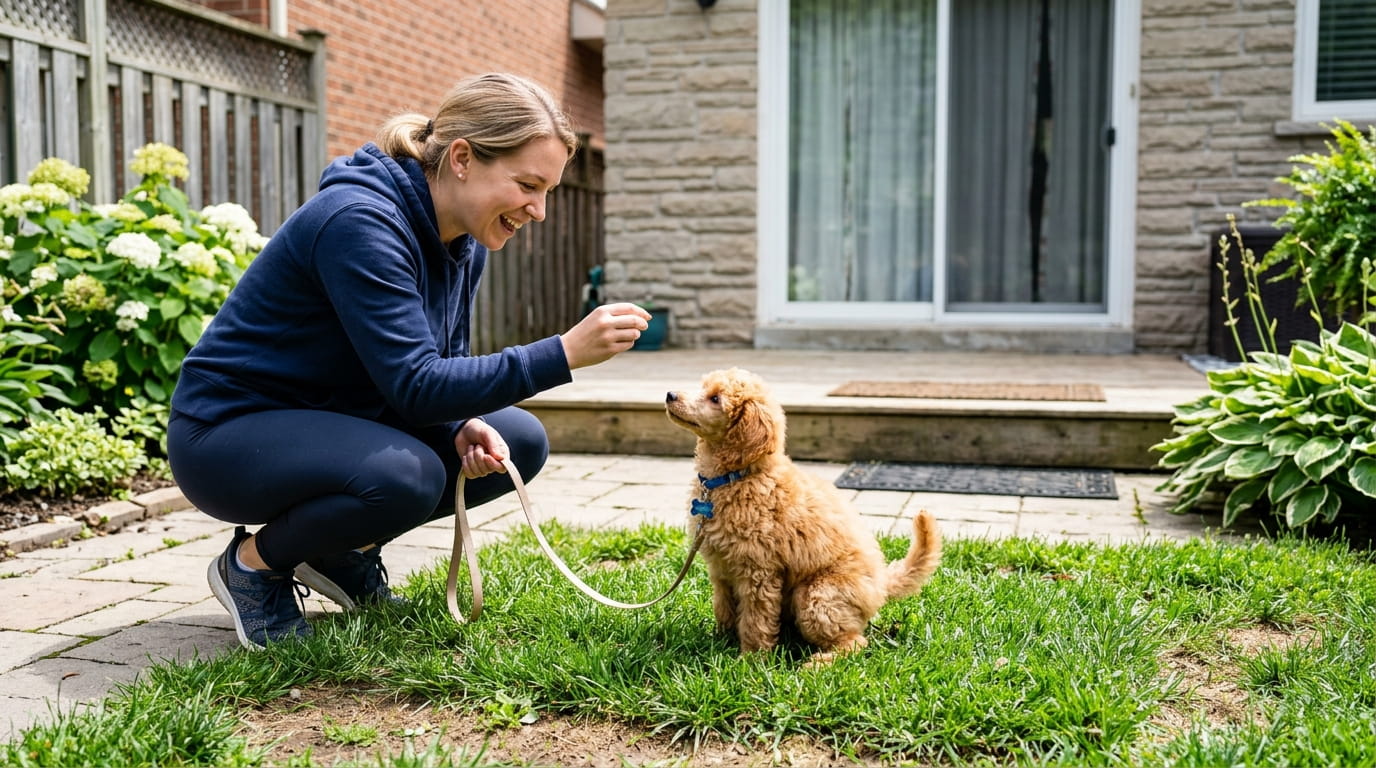
Good travel potty habits start before the trip. If your Poodle only potties in one exact spot at home, practice in new places before you travel. Take short walks to different grassy areas, quiet sidewalks, or pet-friendly parks. Use the same cue each time, such as “go potty,” and reward your dog after they finish. This helps your Poodle learn that the cue applies beyond the backyard.
Poodle potty training also improves when your dog feels comfortable using a leash for bathroom breaks. Some dogs potty freely in a yard but freeze on leash. If your trip involves rest stops, hotels, or city sidewalks, leash confidence matters. Practice short leashed potty breaks at home so your Poodle does not face a brand-new skill during travel.
Pack a potty kit. Include waste bags, cleaning wipes, enzyme cleaner, paper towels, a portable water bowl, extra leash, treats, and any indoor potty supplies your dog already uses. If your Poodle uses pads, bring the same brand when possible. Familiar texture and scent can reduce confusion. However, do not introduce pads during travel unless you want your dog to use them. Sudden changes can create mixed signals.
Before leaving, confirm your lodging rules. Check where dogs can potty, whether grassy areas exist, and whether the property has pet fees or cleaning requirements. This avoids stressful searching after a long drive or flight. A clear plan helps you guide your dog calmly from the moment you arrive.
Keep the Schedule Familiar
Travel days often feel rushed, but your Poodle still needs predictable breaks. Try to keep meal times close to normal. If you feed much earlier or later than usual, potty timing may shift. Also, avoid giving lots of unfamiliar treats, rich foods, or table scraps. Even small changes can upset digestion and lead to urgent accidents.
Poodle potty training works best when you create a simple travel schedule. Offer a potty break before leaving, after arriving, after meals, after naps, after play, and before bedtime. Puppies may need breaks even more often. Adult dogs may still need extra chances because new environments can make them unsure.
During road trips, stop before your dog becomes desperate. A planned break feels calmer than an emergency stop. Give your Poodle a few quiet minutes to sniff and settle. Some dogs need movement before they can go, while others need stillness. Stay patient and avoid rushing. If your dog does not go, try again soon.
Water routines also matter. Do not withhold water to prevent accidents, especially in warm weather or during long travel. Instead, offer water regularly and plan breaks around it. Hydration supports comfort and health. With a better schedule, you can manage potty needs without making your dog thirsty.
Use Familiar Cues in New Places
Your Poodle needs clear communication during travel. Use the same potty cue you use at home. Say it calmly when you reach the chosen spot, then give your dog time to sniff. Once they go, praise warmly and offer a small reward. This simple pattern tells your dog that the rule has not changed, even though the location has.
Poodle potty training becomes more reliable when rewards happen right after the correct behavior. Do not wait until you return to the hotel room or car. Reward outside immediately after your dog finishes. This helps your Poodle connect the reward to the outdoor potty choice.
Choose potty areas with care. Many dogs prefer grass, but some travel locations only offer gravel, mulch, pavement, or artificial turf. If your Poodle has never used these surfaces, introduce them slowly when possible. During a trip, reward generously when your dog tries a new surface. That confidence can prevent future hesitation.
Avoid distracting potty spots when you can. Busy sidewalks, barking dogs, traffic, and crowds can make sensitive Poodles forget why they are outside. Look for quieter areas, especially for the first break after arrival. Once your dog understands the new potty place, future breaks usually become easier.
Manage the First Hour After Arrival
The first hour in a new place sets the tone. Your Poodle may want to sniff every corner, jump on furniture, explore bags, or follow you from room to room. However, free exploration before a potty break can lead to accidents. Take your dog outside immediately when you arrive, even if they went during the trip.
Poodle potty training during travel improves when you supervise closely at first. After the first outdoor break, keep your dog near you with a leash, playpen, crate, or gated area. This prevents wandering into bedrooms, hallways, or carpeted corners. Once your dog settles and understands the space, you can gradually allow more freedom.
If your dog does not potty outside after arrival, do not assume they are empty. Try again within 15 to 30 minutes. New smells can distract dogs from their bodies. A second quiet trip outside often works better than the first rushed attempt.
Set up your dog’s sleeping area early. A familiar bed, blanket, crate, or mat can help your Poodle feel grounded. Dogs often avoid soiling their rest space, so a clear resting area can support better habits. Still, do not rely on that alone. Supervision and timely breaks remain essential.
Prevent Accidents Indoors
Prevention matters more than correction. If your Poodle has an accident in a hotel or rental, punishment will not teach the right lesson. It may only make your dog hide future accidents. Instead, manage space, watch body language, and take your dog out often enough to succeed.
Poodle potty training needs extra supervision in unfamiliar indoor spaces. Watch for sniffing, circling, pacing, sudden wandering, whining, or heading toward corners. These signs often mean your dog needs to go. Calmly interrupt and take them outside. If they finish outdoors, reward them.
Use an enzyme cleaner for any accident. Regular cleaners may remove the stain for humans, but dogs can still smell traces. If scent remains, your Poodle may return to the same spot. Bring your own cleaner because lodging may not provide one designed for pet accidents.
Avoid giving your dog full access to large spaces right away. Carpets, rugs, curtains, and hidden corners can feel tempting, especially if other pets stayed there before. Start with one easy-to-monitor area. Then expand access after your dog has had several successful breaks.
Traveling With Puppies, Seniors, and Anxious Poodles
Puppies need the most structure. They have small bladders and limited control, so travel can overwhelm them quickly. Plan frequent breaks, reward every outdoor success, and keep indoor freedom very limited. If your puppy uses pads at home, decide whether travel pads fit your long-term plan. Mixed indoor and outdoor rules can confuse some puppies.
Senior Poodles may also need more patience. Older dogs may drink more, move slowly, or need shorter walks. Some seniors have medical conditions that affect potty habits. Therefore, schedule more breaks than you think they need. Also, choose lodging with easy outdoor access if possible. Stairs, elevators, and long hallways can create problems when a senior needs to go quickly.
Anxious dogs need calm handling. A nervous Poodle may not potty in noisy or crowded areas. They may hold it for hours, then have an accident indoors once they finally relax. Give anxious dogs quiet breaks, familiar cues, and enough time. If needed, return to the same potty spot several times so it becomes more familiar.
Poodle potty training should stay gentle for every age. Accidents during travel are information, not rebellion. They tell you the schedule, environment, or support level needs adjustment. When you respond calmly, your dog can recover faster.
Car, Hotel, and Vacation Rental Potty Tips
Car travel needs planning. Feed lightly before long drives if your dog gets motion sickness, but do not skip meals without reason. Offer a bathroom break before loading the car. Then stop regularly at safe, dog-friendly places. Keep your Poodle leashed before opening the car door, even if they are usually reliable. New locations can trigger sudden excitement.
At hotels, take your dog to the approved potty area right away. Use the same route each time when possible. This builds a pattern quickly. If the hotel has elevators or long hallways, leave earlier than you would at home. Your dog may need extra time to reach the outdoor area.
Vacation rentals can be tricky because they may contain scents from other pets. Check the space when you arrive, and block access to carpeted rooms if needed. Keep doors closed, use baby gates if available, and supervise closely. If the property has a yard, inspect fences before allowing any off-leash time.
Poodle potty training can also be harder during family visits. Relatives may feed snacks, open doors, or distract your dog from the routine. Explain your schedule politely. Ask everyone to avoid extra treats and to tell you if your dog signals at the door. Clear communication helps protect your progress.
What to Do When Accidents Happen
Even with good planning, accidents may happen. Stay calm. Take your Poodle outside if they are mid-accident, but do not scold. If they finish outdoors, praise them. Then clean the indoor spot thoroughly with enzyme cleaner. Afterward, adjust the schedule so your dog gets another chance sooner next time.
Poodle potty training improves when you review what happened. Did your dog drink more than usual? Did you miss a signal? Was the potty area too loud? Did your dog have full access too soon? Did meal timing change? These questions help you fix the cause instead of blaming the dog.
If accidents happen repeatedly, tighten the routine. Increase outdoor breaks, limit indoor space, return to rewards, and use a leash indoors for short periods if needed. This temporary structure can rebuild success quickly. Once your dog stays accident-free for a day or two, slowly allow more freedom again.
Watch for medical signs. Frequent urination, straining, blood in urine, diarrhea, vomiting, sudden loss of control, or accidents in a normally reliable adult dog may need veterinary care. Do not assume every accident is behavioral. Travel stress can reveal health issues that were not obvious at home.
Build Confidence for Future Trips
Every trip can teach your Poodle that potty rules travel with them. After each successful break, your dog gains confidence. After each calm response to a mistake, they learn that you remain safe and predictable. Over time, travel routines become more familiar.
Poodle potty training becomes easier when you practice mini-trips before major travel. Visit a friend’s yard, take a short overnight stay, or practice rest-stop potty breaks during local drives. These low-pressure experiences help your dog generalize the habit. They also help you discover what supplies and schedules work best.
Keep a simple travel checklist. Include potty supplies, feeding items, familiar bedding, cleaning products, vaccination records, and any medication. A checklist lowers your stress, which can help your dog feel calmer too. When you feel prepared, you give clearer guidance.
After the trip, return to your normal home routine right away. Some dogs need a day or two to settle. Keep potty breaks predictable and reward good choices if your dog seems unsure. This helps prevent travel confusion from lingering after you unpack.
Conclusion: Travel Potty Success Comes From Routine
Poodle potty training can stay steady during travel when you plan ahead and keep the process familiar. Your dog needs clear cues, regular breaks, calm supervision, and a predictable routine. New places can confuse even well-trained Poodles, so patience matters. Instead of treating accidents as bad behavior, treat them as signs that your dog needs more support.
A successful trip starts before you leave home. Practice in new places, pack the right supplies, protect the schedule, and supervise closely when you arrive. Then reward outdoor success and clean accidents without drama. With each trip, your Poodle can learn that potty habits remain the same, even when the scenery changes. That confidence makes travel easier, cleaner, and more enjoyable for both of you.
FAQ
1. Why Does My Poodle Have Accidents While Traveling?
Travel changes routine, smells, surfaces, and stress levels. Even a trained dog may feel confused in a new place. Extra breaks and closer supervision usually help.
2. How Often Should I Take My Dog Out on a Trip?
Offer breaks before leaving, after arriving, after meals, after naps, before bedtime, and during long drives. Puppies and seniors need more frequent chances.
3. Should I Use Potty Pads in Hotels?
Use pads only if your dog already understands them or you want indoor potty use. Introducing pads suddenly can confuse some dogs that normally go outside.
4. What Should I Pack for Travel Potty Problems?
Bring waste bags, treats, wipes, enzyme cleaner, paper towels, a leash, water bowl, and familiar potty supplies. These items help you respond quickly and calmly.
5. Should I Punish My Dog for an Accident Away From Home?
No, punishment can increase stress and may make your dog hide accidents. Clean the spot, adjust the schedule, and reward the next outdoor success.