
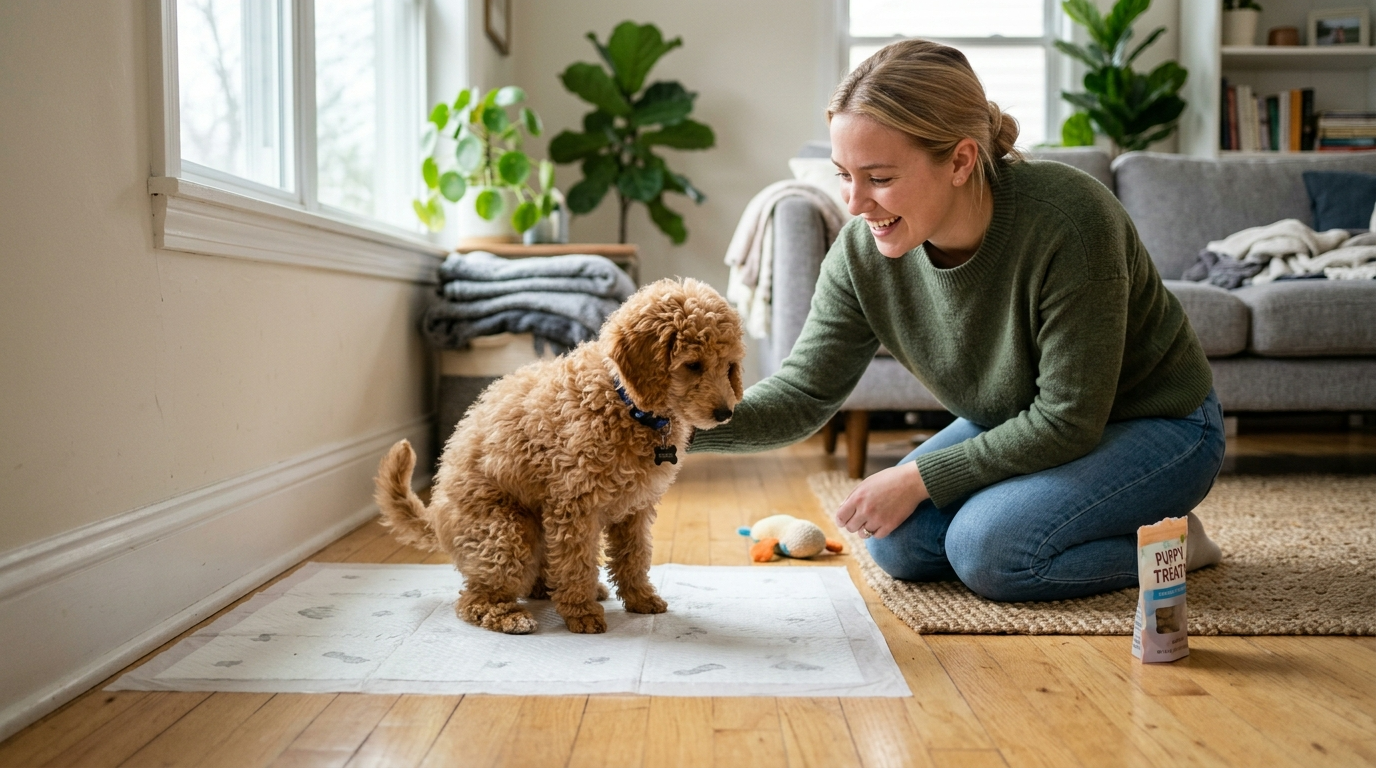
Puppy Poodle potty training can feel overwhelming during the first few weeks at home. However, when you use crate training properly, you create structure and predictability. As a result, accidents decrease and confidence grows.
Many new owners struggle because they rely on random bathroom breaks. Instead, a crate provides a safe space and encourages bladder control. Since dogs naturally avoid soiling their sleeping area, this instinct supports learning.
In this guide, you will learn how to use a crate effectively for Puppy Poodle potty training. More importantly, you will discover how to build habits that last long after puppyhood.
Why Crate Training Works for Poodles
Poodles are intelligent, sensitive, and quick learners. Therefore, they respond well to consistent routines. Because structure reduces confusion, crate training supports faster housebreaking.
Dogs instinctively keep their den clean. When the crate size fits correctly, your puppy avoids accidents inside it. Consequently, you gain more control over bathroom timing.
Additionally, crates prevent unsupervised wandering. Without supervision, puppies often eliminate in hidden corners. However, when confined appropriately, they wait until you guide them outside.
Crate training does not mean confinement all day. Instead, it builds predictable cycles of rest, play, and potty breaks. Over time, this rhythm strengthens Puppy Poodle potty training success.
Choosing the Right Crate Size
Selecting the proper crate size matters greatly. The crate should allow your puppy to stand, turn around, and lie down comfortably. However, it should not offer extra space for accidents.
If the crate is too large, your puppy may eliminate in one corner and sleep in another. Therefore, adjustable divider panels work well for growing Poodles.
Place soft bedding inside for comfort. Additionally, keep the crate in a quiet yet central area of your home. This placement reduces isolation while preventing overstimulation.
Once the crate becomes a positive space, Puppy Poodle potty training progresses more smoothly.
Introducing the Crate the Right Way
Positive associations are essential. Therefore, never force your puppy into the crate.
Start by placing treats inside and allowing voluntary exploration. Praise calmly when your puppy enters. Short sessions build comfort without stress.
Feed meals near or inside the crate at first. Gradually close the door for brief periods while you remain nearby. Slowly increase the duration over several days.
If whining occurs, wait for a brief pause before opening the door. Otherwise, you may reinforce vocal behavior.
With patience and consistency, the crate becomes a secure resting place rather than a punishment tool.
Creating a Reliable Potty Schedule
Consistency drives Puppy Poodle potty training success. Puppies need frequent bathroom breaks, especially during the early weeks.
Take your puppy outside immediately after waking. Additionally, go out after meals, play sessions, and naps. Young puppies often require bathroom trips every two hours.
Use the same exit door each time. Furthermore, guide your puppy to the same outdoor spot. Familiar scents reinforce learning.
When elimination occurs, praise enthusiastically and offer a small reward. Immediate reinforcement strengthens the connection between location and action.
Structured timing combined with crate intervals reduces accidents dramatically.
How Long Can a Puppy Stay in the Crate?
Age determines crate duration. A general rule suggests one hour per month of age. For example, a three-month-old puppy can typically hold it for three hours.
However, overnight stretches may extend slightly longer. Even so, young puppies still require nighttime breaks.
Never exceed your puppy’s bladder capacity. If accidents occur frequently in the crate, you may need shorter intervals.
Regular outdoor trips ensure that Puppy Poodle potty training stays on track. As your puppy matures, bladder control improves naturally.
Handling Accidents Calmly
Accidents happen, especially during early learning stages. When they occur, avoid punishment.
Instead, clean the area thoroughly with an enzymatic cleaner. This removes scent markers that encourage repeat behavior.
If you catch your puppy in the act, interrupt gently and take them outside immediately. Reward completion in the correct spot.
Harsh reactions create fear and confusion. Because Poodles are sensitive, calm correction works best.
By responding consistently, you reinforce desired behavior without damaging trust.
Nighttime Crate Training Strategies
Night training often challenges new owners. However, preparation makes it manageable.
Place the crate near your bed during the first weeks. Proximity reassures your puppy and helps you hear early signals.
Set an alarm for scheduled nighttime potty breaks. Gradually extend intervals as bladder control strengthens.
Avoid play during overnight trips. Keep interactions calm and brief. Then return your puppy directly to the crate.
Within weeks, most puppies sleep longer without accidents. As a result, Puppy Poodle potty training becomes less demanding.
Using Positive Reinforcement Effectively
Rewards accelerate learning. Therefore, use small treats and enthusiastic praise immediately after successful elimination.
Timing matters. Deliver rewards within seconds for maximum clarity. Delayed praise weakens the connection.
Additionally, maintain a cheerful tone. Positive energy builds confidence and encourages repetition.
Over time, you can reduce treat frequency. However, continue verbal praise to reinforce good habits.
Consistent rewards make Puppy Poodle potty training both faster and more enjoyable.
Preventing Common Crate Training Mistakes
Avoid using the crate as punishment. If negative associations form, resistance increases.
Do not leave puppies crated for excessive periods. Long confinement may lead to anxiety or accidents.
Ensure adequate exercise and play outside the crate. Mental stimulation reduces restlessness.
Monitor feeding times carefully. Predictable meals lead to predictable bathroom needs.
When you combine balanced activity with structure, Puppy Poodle potty training remains steady and stress-free.
Transitioning to More Freedom
As your puppy proves reliable, gradually increase supervised freedom. Start with short periods in one room.
Watch closely for pre-potty signals such as circling or sniffing. If signs appear, guide your puppy outside immediately.
Continue using the crate when unsupervised until accidents disappear consistently. Rushing freedom often causes setbacks.
Eventually, your Poodle develops strong bladder control and clear routines. At that stage, crate reliance decreases naturally.
Gradual transitions preserve progress and confidence.
Building Long-Term Habits
Successful Puppy Poodle potty training depends on repetition and patience. Even after early success, maintain routine for several months.
Consistency builds automatic behavior. Although occasional accidents may occur, steady reinforcement prevents regression.
Maintain outdoor trips at regular intervals. Additionally, continue praising correct behavior.
Remember that growth stages may temporarily disrupt progress. However, persistence ensures long-term reliability.
With dedication, crate training evolves from a tool into a foundation for lifelong house manners.
Final Thoughts on Crate-Based Potty Success
Puppy Poodle potty training becomes far less stressful when you use crate training properly. Structure, timing, and patience work together to create clear expectations.
Start with the right crate size and positive introduction. Then establish consistent potty schedules and reinforce success immediately.
Avoid punishment and focus on calm guidance. Because Poodles respond strongly to positive reinforcement, encouragement produces better results than correction.
Although housebreaking requires effort, it does not have to feel chaotic. With steady routines and thoughtful supervision, Puppy Poodle potty training turns into a manageable and rewarding process.
Stay consistent, remain patient, and celebrate progress. Soon, your Poodle will understand exactly where and when to go.
FAQ
- How long does housebreaking usually take?
Most Poodle puppies show strong progress within four to eight weeks, depending on consistency and supervision. - Should I cover the crate at night?
Some puppies feel calmer with partial covering. However, ensure proper airflow and monitor comfort. - What if my puppy cries in the crate?
Wait for a brief pause before responding. Then check if a potty break is needed rather than offering attention. - Can older Poodles learn crate-based house training?
Yes, adult dogs can adapt quickly when routines remain consistent and positive reinforcement is used. - Is it okay to use puppy pads with crate training?
Pads may confuse outdoor training goals. Therefore, direct outdoor elimination typically produces faster long-term success.