
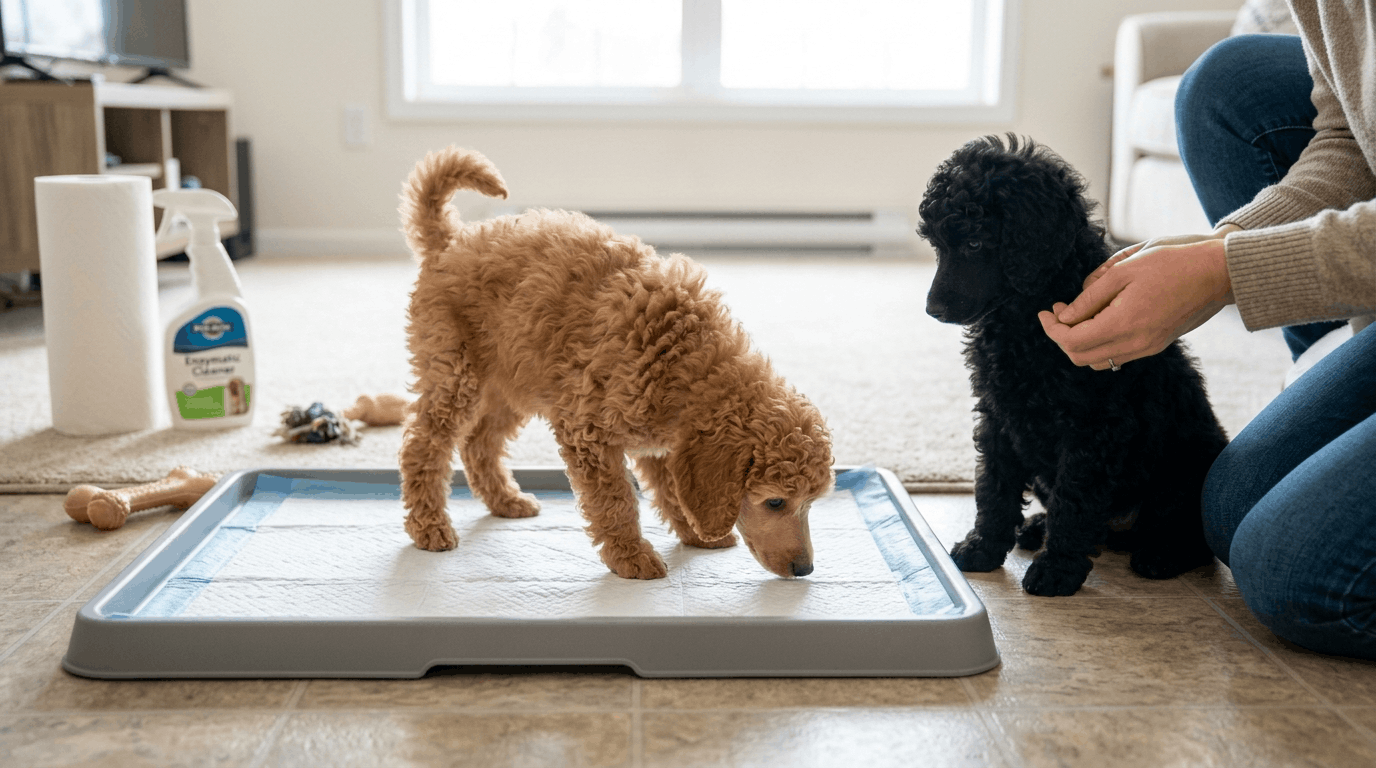
Potty training poodle puppies apartments can feel overwhelming at first, especially when you are working with limited space and no backyard access. However, with the right approach, patience, and consistency, you can successfully teach your puppy where and when to go. While poodles are intelligent and quick learners, they still need clear guidance and structure to build good habits, particularly in an apartment setting where accidents can happen easily.
Living in an apartment adds unique challenges, yet it also offers opportunities to create a controlled training environment. Because space is limited, you can monitor your puppy more closely and respond faster to their needs. As a result, your training can become more effective if you stay consistent and proactive. The key is to establish routines early and stick to them, even when it feels repetitive.
Understanding Your Puppy’s Natural Behavior
Before diving into routines, it helps to understand how puppies think and behave. Potty training poodle puppies becomes easier when you recognize that young puppies have limited bladder control. Typically, they need to relieve themselves every one to two hours, especially after eating, drinking, or playing.
In addition, poodles tend to avoid soiling their sleeping area, which is a natural instinct you can use to your advantage. This is why crate training often plays an important role in apartment living. When used correctly, a crate creates a safe space where your puppy learns to hold their bladder until they are taken outside or to a designated spot.
Moreover, puppies give subtle signals before they go. These signs include sniffing, circling, or suddenly stopping play. Therefore, paying attention to these cues allows you to act quickly and prevent accidents. Over time, your puppy will begin to associate these signals with the correct potty location.
Creating A Consistent Routine That Works
Consistency is the foundation of potty training poodle puppies. Without a clear schedule, your puppy will struggle to understand when and where to go. Therefore, setting regular feeding and potty times helps establish a predictable pattern.
Start by taking your puppy out first thing in the morning. Then, continue with frequent breaks throughout the day, especially after meals and naps. Additionally, always take them out before bedtime to reduce the chance of overnight accidents.
Equally important, use the same route and potty spot each time. This repetition helps your puppy associate that specific area with the act of relieving themselves. As a result, they will learn faster and feel more confident in their routine.
When your puppy successfully goes in the right place, reward them immediately. Positive reinforcement, such as treats or praise, strengthens the behavior and encourages repetition. Over time, these small rewards lead to consistent habits.
Choosing The Right Indoor Setup
In many cases, potty training poodle puppies apartments requires an indoor backup option, especially for young puppies that cannot go outside frequently. Puppy pads or artificial grass patches can serve as a temporary solution while your puppy develops better control.
Place the potty area in a consistent location, away from food and sleeping spaces. This separation helps your puppy understand the difference between living and bathroom areas. Additionally, avoid moving the pads too often, as this can confuse your puppy and slow down progress.
Although indoor options are helpful, they should not replace outdoor training entirely. Instead, use them as a stepping stone while gradually encouraging your puppy to go outside more often. This balance ensures that your puppy adapts to both environments when necessary.
Handling Accidents Without Setbacks
Accidents are a normal part of potty training poodle puppies apartments, so it is important to respond calmly and effectively. When an accident happens, avoid punishment or scolding, as this can create fear and confusion. Instead, focus on redirecting your puppy to the correct spot.
Clean the area thoroughly using an enzyme-based cleaner. This step is crucial because lingering odors can attract your puppy back to the same spot. By removing the scent completely, you reduce the likelihood of repeated accidents.
If you catch your puppy in the act, gently interrupt them and take them to the designated potty area. Once they finish in the correct place, reward them immediately. This approach reinforces the desired behavior without causing stress.
Consistency in your response helps your puppy learn faster. Over time, they will begin to understand where they should go, reducing the number of accidents significantly.
Managing Apartment Challenges Effectively
Apartment living presents specific obstacles, yet they can be managed with the right strategies. Potty training poodle puppies apartments often involves navigating elevators, stairs, or long hallways, which can delay access to outdoor spaces.
To address this, plan ahead and act quickly when your puppy shows signs of needing to go. Keep essentials like a leash and treats near the door for easy access. Additionally, consider using a designated potty area closer to your building if available.
Noise and distractions can also impact your puppy’s focus. Therefore, choose quieter times for initial training sessions to help your puppy stay calm and attentive. As they become more confident, they will adapt to busier environments more easily.
Weather can be another factor, especially in apartments without covered outdoor areas. In such cases, having an indoor backup option ensures that your training continues without interruption.
Using Crate Training For Faster Results
Crate training can significantly improve potty training poodle puppies apartments when used correctly. Because puppies naturally avoid soiling their sleeping space, a properly sized crate encourages them to hold their bladder.
Choose a crate that is just large enough for your puppy to stand, turn, and lie down comfortably. If the crate is too big, your puppy may use one corner as a bathroom, which defeats the purpose.
Introduce the crate gradually and make it a positive space with soft bedding and toys. Never use it as a form of punishment, as this can create negative associations. Instead, use the crate to establish structure and routine.
When used consistently, crate training helps your puppy develop better bladder control and reduces accidents in your apartment. Over time, it becomes a valuable tool in your overall training strategy.
Building Long-Term Good Habits
Developing lasting habits is the ultimate goal of potty training poodle puppies apartments. While early training requires frequent supervision, your efforts will pay off as your puppy grows and gains better control.
Gradually increase the time between potty breaks as your puppy matures. This helps them build endurance and adapt to a more flexible schedule. However, avoid pushing too quickly, as setbacks can occur if your puppy is not ready.
Consistency remains essential even after initial success. Continue reinforcing good behavior with praise and occasional rewards. This ongoing encouragement helps maintain the habits your puppy has learned.
As your puppy becomes fully trained, you will notice fewer accidents and more reliable behavior. This progress not only makes apartment living easier but also strengthens the bond between you and your dog.
When Progress Feels Slow
At times, potty training poodle puppies apartments may seem slower than expected. However, this is completely normal and often part of the learning process. Every puppy develops at their own pace, and setbacks can happen along the way.
If progress stalls, review your routine and identify any inconsistencies. Small adjustments, such as more frequent breaks or clearer cues, can make a significant difference. Additionally, ensure that everyone in your household follows the same training approach to avoid confusion.
Patience is key during this stage. By staying consistent and supportive, you help your puppy build confidence and trust. Over time, these qualities lead to more reliable behavior and long-term success.
Conclusion
Potty training poodle puppies apartments may come with challenges, but it is entirely achievable with the right mindset and approach. By understanding your puppy’s behavior, establishing a consistent routine, and using tools like crate training and indoor setups, you create a clear path to success. Although accidents are part of the journey, they provide valuable learning opportunities when handled correctly. Ultimately, your patience and consistency will lead to a well-trained, confident puppy that thrives in apartment living.
FAQ
1. How long does it take to train a puppy in an apartment?
Most puppies take a few weeks to a few months, depending on consistency and routine.
2. Should I use puppy pads or go straight to outdoor training?
You can use both, but gradually transition to outdoor habits for long-term success.
3. What are signs my puppy needs to go?
Common signs include sniffing, circling, and sudden restlessness.
4. Is crate training necessary for apartment living?
It is not required, but it can speed up training and reduce accidents.
5. How do I prevent repeated accidents in the same spot?
Use enzyme cleaners to remove odors and reinforce the correct potty location consistently.