Teaching a Poodle puppy to use the bathroom outside can already feel challenging during ideal weather conditions. However, rain, snow, freezing temperatures, and strong winds often make the process even more difficult for both dogs and owners. Many puppies become distracted, uncomfortable, or reluctant to eliminate outdoors during bad weather. Fortunately, successful potty training poodles outdoors remains possible with consistency, preparation, patience, and the right routine.
Poodles are intelligent and emotionally sensitive dogs. Because they notice environmental discomfort quickly, harsh weather conditions may create hesitation or anxiety during bathroom trips. Puppies especially may dislike cold surfaces, wet fur, loud storms, or icy ground under their paws.
Many owners become frustrated when previously successful puppies suddenly resist going outside during weather changes. However, this behavior usually reflects discomfort or uncertainty rather than stubbornness.
The best strategies for potty training poodles outdoors focus on consistency, emotional reassurance, environmental preparation, and realistic expectations. Dogs generally learn more successfully when owners remain calm and predictable despite difficult conditions.
Most importantly, owners should avoid creating fear or punishment around accidents during stressful weather periods.
Why Weather Complicates Potty Training
Young puppies already struggle with limited bladder control and developing routines. When uncomfortable weather enters the situation, distractions and emotional resistance often increase significantly.
Many owners attempting potty training poodles outdoors notice puppies refusing to leave covered areas during rain or snow. Some puppies may squat briefly without fully eliminating before rushing back indoors immediately.
Cold temperatures may also cause puppies to move faster and lose focus outdoors. Wet fur, freezing wind, or icy surfaces often create physical discomfort that interrupts bathroom routines.
Additionally, storms and loud environmental sounds may increase nervousness in sensitive Poodles. Thunder, heavy rain, or strong wind sometimes overwhelm puppies emotionally.
Understanding these reactions helps owners respond with patience rather than frustration during setbacks.
Maintaining Consistency During Bad Weather
Consistency remains one of the most important elements of successful house training. Even when weather becomes unpleasant, routines should remain predictable whenever possible.
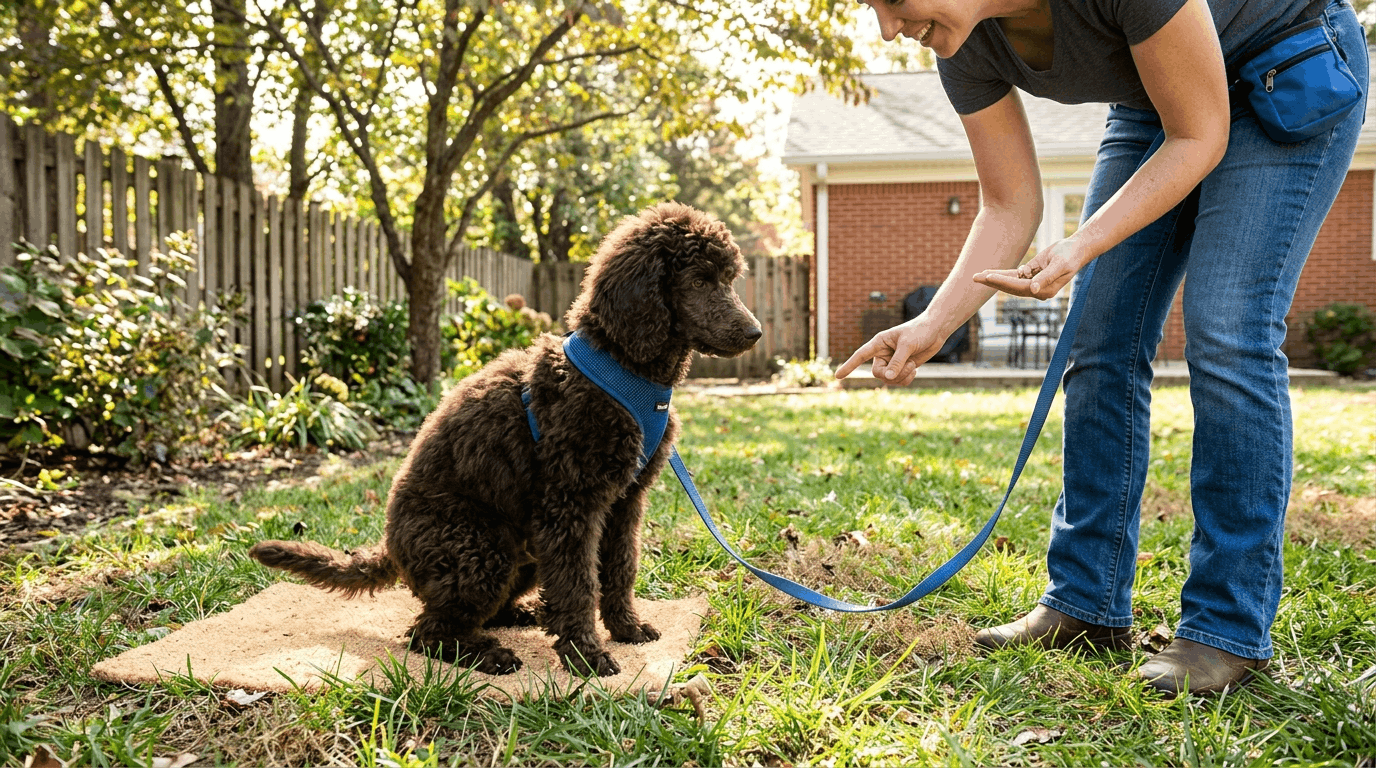
Potty training poodles outdoors works best when owners continue using the same potty location, verbal cue, and schedule despite changing conditions.
Puppies learn faster when expectations remain clear and repetitive. Suddenly switching between indoor pads and outdoor potty training may confuse developing habits if not handled carefully.
Owners should continue taking puppies outside at regular intervals after meals, naps, play sessions, and waking periods.
Calm predictable routines help puppies understand that bathroom behavior expectations remain unchanged regardless of weather conditions.
Although occasional setbacks are normal, consistent repetition usually restores progress quickly.
Creating a Comfortable Outdoor Potty Area
Environmental comfort greatly influences willingness to eliminate outdoors. Therefore, preparing safe and manageable potty areas becomes extremely helpful during difficult weather.
Successful potty training poodles outdoors often involves creating partially sheltered bathroom spots whenever possible.
Covered patios, awnings, or protected yard corners may reduce exposure to heavy rain or snow. Puppies generally feel more willing to stay outside long enough to eliminate when weather discomfort decreases slightly.
Owners should also clear snow or ice from potty areas regularly during winter. Frozen surfaces may feel painful or intimidating for small sensitive paws.
Artificial grass patches or designated potty zones sometimes help maintain consistency during extreme conditions as well.
Reducing environmental discomfort supports confidence and cooperation significantly over time.
Using Proper Outdoor Gear
Cold and wet weather often affect small and curly-coated dogs more strongly than many owners realize. Consequently, proper gear may improve outdoor potty success greatly.
Potty training poodles outdoors during winter sometimes becomes easier when puppies wear lightweight weather protection such as waterproof jackets or insulated sweaters.
Toy and Miniature Poodles especially lose body heat quickly during freezing conditions because of smaller body size.
Paw protection may also help some dogs tolerate icy or salted surfaces more comfortably. However, puppies often require gradual introduction to boots before accepting them calmly.
Owners should choose properly fitted gear allowing comfortable movement and quick bathroom access.
Clothing should support comfort rather than restrict natural movement or create additional stress.
Staying Calm During Weather Resistance
Many puppies hesitate outdoors during unpleasant weather. Owners sometimes unintentionally increase stress by becoming frustrated or rushing the process emotionally.
Effective potty training poodles outdoors requires calm patient responses even when progress temporarily slows.
Dragging puppies forcefully or yelling during resistance may create stronger negative associations with outdoor bathroom trips.
Instead, owners should remain encouraging and emotionally neutral. Calm praise, gentle guidance, and quiet waiting usually produce better results over time.
If puppies become distracted or anxious, short repeated potty attempts often work better than prolonged stressful outdoor sessions.
Patience helps puppies build confidence gradually while learning that outdoor elimination remains safe despite environmental discomfort.
Recognizing Signs Puppies Need to Go
Weather distractions often make potty timing more important than ever. Puppies taken outside too late may have accidents quickly because discomfort reduces patience outdoors.
Owners focused on potty training poodles outdoors should watch carefully for pacing, sniffing, whining, circling, sudden wandering, or restlessness indoors.
Recognizing early signals allows owners to respond before urgency becomes overwhelming.
Puppies usually eliminate more successfully when taken outside proactively rather than reactively after visible desperation begins.
Keeping consistent logs during training may also help identify predictable potty timing patterns more accurately.
Observation and routine generally improve success rates significantly during challenging weather periods.
Using Positive Reinforcement Effectively
Positive reinforcement remains essential during outdoor potty training, especially when weather creates additional emotional resistance.
Potty training poodles outdoors becomes more successful when owners reward outdoor elimination immediately and enthusiastically.
Treats, praise, or affection help puppies associate successful outdoor bathroom behavior with positive outcomes despite uncomfortable weather conditions.
Timing matters greatly. Rewards should occur immediately after elimination rather than once puppies return indoors.
High-value treats often work especially well during rain, snow, or cold weather because they increase motivation during stressful conditions.
Punishment for accidents should never occur. Puppies do not intentionally misbehave during weather-related setbacks.
Managing Snow and Winter Conditions
Snow creates unique potty training challenges because many puppies become distracted, playful, or uncomfortable in unfamiliar winter environments.
Potty training poodles outdoors during snowstorms often requires shorter but more frequent potty breaks initially.
Some puppies enjoy snow so much that they forget bathroom goals entirely. Others dislike cold textures immediately and resist stepping outdoors.
Owners should keep potty areas shoveled and accessible whenever possible. Consistent paths often reduce confusion and hesitation significantly.
Warm towels near entry doors also help dry paws and fur quickly after outdoor trips.
Winter routines generally improve once puppies become more familiar with cold-weather experiences gradually.
Helping Puppies During Rainy Weather
Rain commonly creates resistance because many Poodles dislike wet fur and noisy weather conditions. Some puppies refuse to leave covered areas entirely during storms.
Owners working on potty training poodles outdoors during rainy seasons should stay patient and avoid creating rushed emotional energy.
Umbrellas, covered potty spaces, or quick access outdoor areas often help reduce stress.
Keeping grooming towels near exits also helps puppies feel more comfortable after returning indoors.
Some owners accidentally encourage avoidance by shortening potty trips excessively during rain. Puppies still need enough time to relax and eliminate successfully outdoors.
Calm repetition usually helps puppies adapt to rainy conditions gradually.
Preventing Indoor Accidents During Weather Changes
Weather-related setbacks may temporarily increase indoor accidents, especially during puppyhood. Therefore, supervision becomes especially important during seasonal transitions.
Potty training poodles outdoors works best when owners manage indoor freedom carefully until reliable habits become established consistently.
Crate training often helps prevent unsupervised accidents because dogs naturally avoid eliminating near sleeping spaces.
Leashing puppies indoors temporarily may also improve supervision during difficult training periods.
Owners should clean accidents thoroughly using enzymatic cleaners removing lingering odor completely. Residual smells sometimes encourage repeated indoor elimination.
Most importantly, setbacks during weather changes remain normal and temporary for many puppies.
Adapting Training for Different Poodle Sizes
Toy, Miniature, and Standard Poodles often respond differently to cold and wet conditions because body size influences heat retention and physical sensitivity.
Potty training poodles outdoors during winter may feel especially challenging for Toy Poodles because smaller dogs lose body heat rapidly.
Miniature Poodles often balance sensitivity and adaptability moderately, while Standard Poodles generally tolerate colder weather more comfortably.
However, personality matters greatly too. Some larger Poodles dislike rain intensely despite stronger cold tolerance physically.
Owners should adjust expectations, clothing, and outdoor timing based on individual dog comfort rather than breed size alone.
Building Long-Term Outdoor Confidence
Confidence develops gradually through repeated positive experiences. Puppies that initially resist bad weather often become much more adaptable over time with patient exposure and consistency.
Successful potty training poodles outdoors focuses on long-term habit formation rather than short-term perfection.
Owners should celebrate small improvements such as quicker elimination, reduced hesitation, or calmer outdoor behavior during storms and cold weather.
Positive emotional experiences matter greatly because fearful or overwhelmed puppies may struggle longer with outdoor confidence.
Routine, patience, and calm leadership usually create the strongest long-term results.
Supporting Healthy House Training Habits
House training success depends on emotional stability, routine, supervision, and realistic expectations. Weather may temporarily complicate progress, although consistent habits still produce reliable long-term results eventually.
Potty training poodles outdoors becomes easier when owners remain calm, prepared, and emotionally supportive during setbacks.
Poodles generally learn quickly because of their intelligence and responsiveness to positive reinforcement. However, they also respond strongly to emotional pressure and environmental discomfort.
Most importantly, owners should remember that accidents during rain, snow, or freezing conditions are normal parts of puppy development rather than signs of failure.
With patience, predictable routines, weather preparation, and positive reinforcement, most Poodles eventually learn to eliminate outdoors confidently in nearly all conditions. Calm consistent training creates stronger lifelong bathroom habits while building trust and emotional resilience throughout every stage of development.
FAQ
1. Why do some Poodles refuse to potty outside during rain?
Many Poodles dislike wet fur, loud weather sounds, and slippery surfaces, which may increase hesitation outdoors.
2. Can cold weather slow house training progress?
Yes, freezing temperatures sometimes reduce outdoor comfort and patience, especially for puppies and smaller dogs.
3. Should puppies wear jackets during winter potty trips?
Lightweight weather protection may help Toy and Miniature Poodles stay more comfortable outdoors during cold weather.
4. Is it normal for puppies to regress during snow or storms?
Yes, temporary setbacks commonly happen when weather changes create unfamiliar or stressful outdoor conditions.
5. How can owners encourage outdoor potty success in bad weather?
Consistent schedules, calm praise, sheltered potty areas, and positive reinforcement often improve cooperation significantly.